|
The Mount Meru Connection |
||||||||||||||||||
Note: This is a current
major work in progress
and will have many connections and threads. The page
will be updated as
soon as we finalized each piece of the puzzle so
visit often. If you find
anything that will add to our quest please feel free
to submit it to the
webmaster
|
||||||||||||||||||
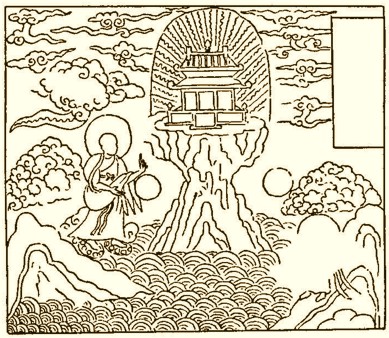
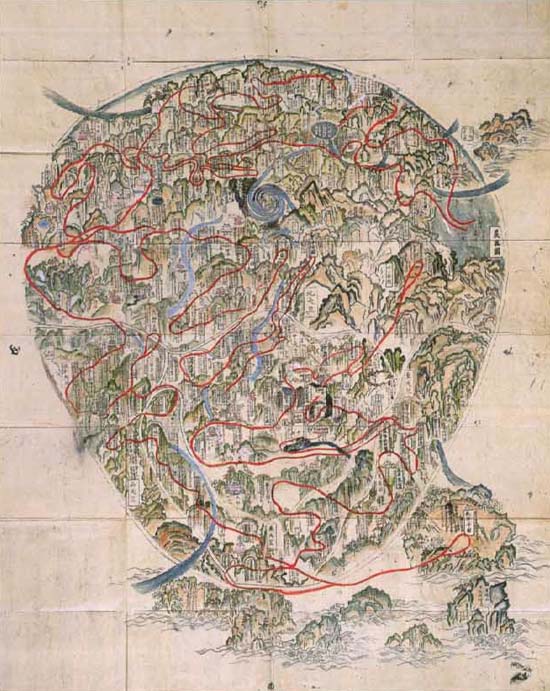
| "In Japanese Buddhist philosophy, a giant
mountain called Mount
Sumeru (Shumisen) was believed to stand at the center
of the world."
from Japanese Connection
"In popular Indian cosmography Mt. Sumeru a
magnificient mountain
of gold and gems shaped like a cup or the seed
vessel of the lotus, was
believed to form the center of the world,
where all the planets revolved
around it. from India
China Connection
|
||||||||||||||||||
| The Name of The
Mountain
Sumeru (Sanskrit) or Sineru (Pâli) is the name
of the central
world-mountain in Buddhist cosmology.
Other Names denoting the same mountain:
|
||||||||||||||||||
| The Size of The
Mountain
According to Vasubandhu's
Abhidharmako?abh?syam, Sumeru is 80,000
yojanas tall. The exact measure of the yojana is
uncertain, but some accounts
put it at about 24,000 feet, or approximately 4 1/2
miles.
It also descends beneath the surface of the
surrounding waters to a depth
of 80,000 yojanas, being founded upon the basal
layer of Earth. Sumeru
is often used as a simile for both size and
stability in Buddhist texts.
|
||||||||||||||||||
The Location of
The Mountain
Figure 1
|
||||||||||||||||||
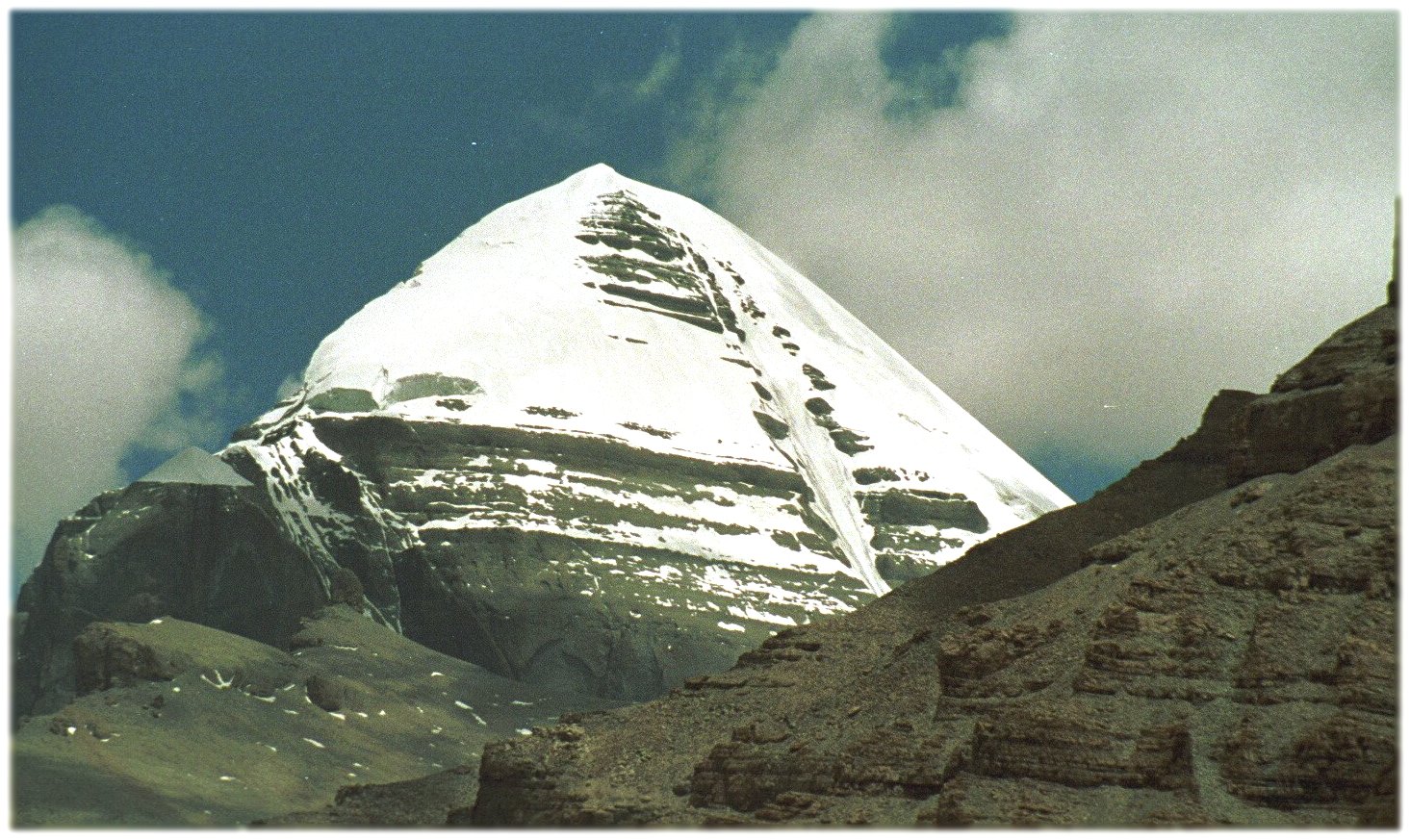
The legends, puranas and
Hindu epics frequently
state that Surya, the sun-God, circumnambulates
Mount Meru every day. In
late 19th c. when it was believed that Aryans may
have had their original
home Urheimat in North Europe, it was thought that
Mount Meru may actually
refer to the north pole. Some beliefs, local
to that area of the Himalayas, associate mythical
Mount Meru with a mountain
called Kailasa near the Lake Manasarovar in Tibet.
|
||||||||||||||||||
| Description of
Mount Meru in Mahabharata:
"Dhritarashtra said.---"Thou art intelligent, O Sanjaya, and acquainted with the truth (about everything). Thou hast duly given a description of the island in brief. Tell us now of the island in detail. Tell us now of the dimension of the expanse of land that lies in the portion looking like a hare. Thou mayst then speak of the portion resembling peepul tree."Source - Rest of the Story See Also...
|
||||||||||||||||||
| Jesus on the
Mountain: A Study in Matthean Theology
pp82-83:
1. Covenant Mountain. The sacred mountains of the OT are best viewed as covenant mountains, i.e. sacred sites at which the covenant relationship between Yahweh and his people was established and maintained. The most striking manifestation of this mountain category in the Second-Temple period was the tendency within Judaism (and later within Samaritanism and Jewish Christianity) to read the sacred mountain into the biblical text as the site for every significant event in Heilsgeschichte, even back to the creation of Adam himself. 2. Cosmic Mountain. With Hellenistic influence in Palestine providing a bridge for foreign ideas, there was an influx of cosmic concepts into Jewish thinking about Mount Zion and about mountains in general. Zion was seen as both Omphalos and axis mundi, and Zion along with other mountains became points of entry into the heavenly sphere. In Jewish apocalypticism there was a fusion of cosmic and eschatological elements—elements which in later Rabbinic thought were treated separately. 3. Mountain of Revelation. Particularly in Jewish apocalypticism, mountains often appear as places where revelations are bestowed. Revelational mountains were generally of two kinds: in one—which probably developed under the influence of the Sinai narratives—the revelation is in the form of divinely-given information, often concerning the events leading up to the End; in the other—which is more characteristically cosmic—the mountain provides a point of entry into the heavenly sphere, where the secrets of heaven and earth are revealed. 4. Eschatological Mountain. In this period,
with its heightened interest
in eschatology generally, there was also a focus on
mountains as sites
for eschatological events. The roots for such an
interest are found in
OT Zion eschatology, and there are many passages
which focus on Mount Zion
as an eschatological site. But other mountains
functioned in this way as
well: the mountain of the Messiah in 4 Ezra 13; the
cosmic mountain of 1 Enoch 24-25; the
various mountains associated
with the revelation of the temple vessels; Mount
Gerizim; the Mount of
Olives which was the site of one attempted messianic
gathering and was
to be the place of the resurrection; Mount Sinai
where Moses and Aaron
were expected to gather the faithful. In all of
these traditions the mountain
is treated as a site that carries with it the
potential and promise of
eschatological
|
||||||||||||||||||
|
The City on the Edge of Forever by Aaron Ross Spring 1992
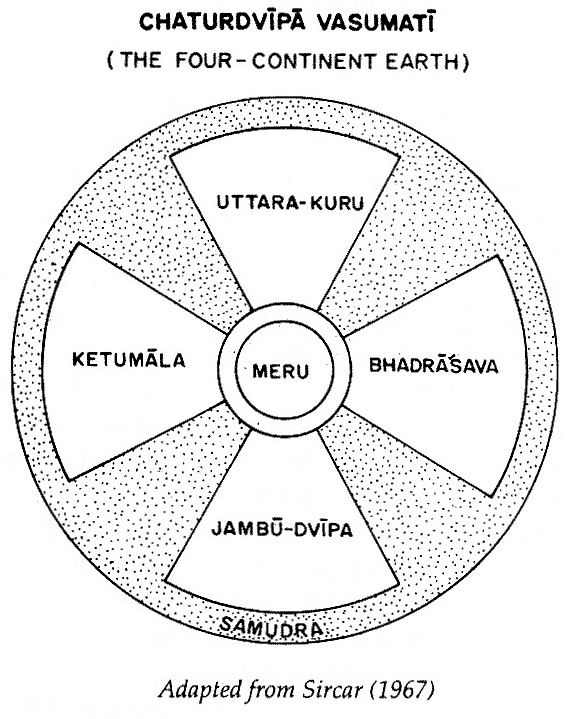
In the mythology of Tibetan Buddhism, Mount Meru is a place which simultaneously represents the center of the universe and the single-pointedness of mind sought by adepts. Thousands of miles in height, Meru is located somewhere beyond the physical plane of reality, in a realm of perfection and transcendence. Symbolic representations of Mount Meru are commonly found in Tibetan mandalas, contemplative diagrams designed to aid meditators in focusing. It is said that Meru has its roots in hell, and its summit in heaven. Meru is surrounded by seven rings of golden mountains, each separated from the other by one of seven circular oceans. It is crowned by a golden palace wherein Indra, king of Hindu gods, resides. This entire superstructure rises from an outer ocean, and is flanked by four main continents, each with two subcontinents. The southern continent, Jambudvipa, corresponds to the physical earth. Each of the other continents represents a nearby planet upon which transmigrating souls following the yellow light-path may be reborn. However, it is said that all of these worlds are undesirable, for they are non-human worlds inhabited by sheep, cattle, or horses. The teachings of Buddhism clearly state that existence as a human being is the only way to achieve Buddhahood, so rebirth in any other form (including that of a deva or demigod) is a distraction from the path to enlightenment. According to legend, somewhere in the northwest region of Jambudvipa lies a land called Shambhala. This is a magical land which is shaped like an eight-petalled lotus flower. It has been ruled by priest-kings for many thousands of years; in fact, the legend of Shambhala predates the introduction of Buddhism into Tibet. In the aboriginal Bon religion, Shambhala is known as Olmolungrung, and is based on the square instead of the circle. Shambhala forms a gateway between the physical and spiritual realms. It is endowed with riches, and is ideally suited for the habitat of enlightened souls. They are not attached to the fruits of karma, and are but one step from Buddhahood. This is the realm to be sought for rebirth if one desires the swiftest path to nirvana. In the Tibetan Buddhist version of the apocalypse, barbarians will overtake the earth at the end of the Kali Yuga, the present age. It will be necessary for the king of Shambhala to join forces with the gods to wage war on the barbarians. At this time, armies will be sent forth from the city, the location of which has been kept secret for millenia. Order will be restored on earth, and the wisdom which Shambhala has been holding will be dispensed to the peoples of the world. Many western explorers, hearing tales of a "golden city" of Shambhala, sought to find it in the frozen wastes of northern Tibet. This resulted in the present-day term "Shangri-la," which, like El Dorado, signifies an unattainable goal. This is an unfortunate misunderstanding, for ultimately Shambhala is a place accessible to anyone, if only one can be free of karmic attachments. |
||||||||||||||||||
|
Star Trek Epsiode 28, Season 1: The City on the Edge of Forever
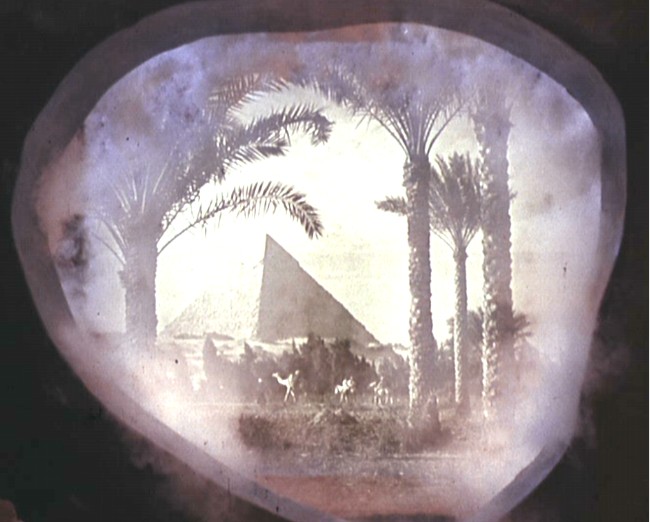
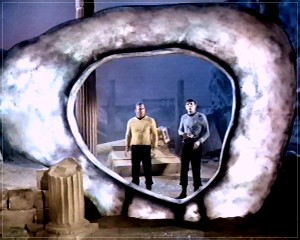
The transporter had been locked in on the center of the time ripples, and when Kirk, Spock, and a landing party follow McCoy down, they discover 10,000 century-old ruins surrounding the annulus-shaped structure from which the time distortions are emanating. The structure talks with the landing party, identifying itself as the Guardian of Forever, and is apparently a time portal. One of the images from the show has a view of Ancient Egypt... Coincidence?
|
||||||||||||||||||
| The Legends of
Mount Meru
Meru, Vayu and Lanka Legends say that Mount Meru and
the wind god Vayu were good friends.
However, the sage Narada approached Vayu and incited
him to humble the
mountain. Vayu blew with full force for one full
year, but Meru was shielded
by Garuda with his wings. However, after a year
Garuda took respite for
some time. Taking advantage of this opportunity,
Vayu increased its force.
Thus the apex of the mountain was broken and it fell
into the sea and created
the island of Sri Lanka.
Another legend well-known to this day in India, is regarding the daily circumnambulation of the sun around mount Meru, and involves the sage Agastya. The legend goes thus: The Vindhya mountains that separate north and south India from each other once showed a tendency to grow so high as to obstruct the usual trajectory of the sun. This was accompanied by increasing vanity on the part of that mountain range, which demanded that Surya, the sun-God, circumnambulate the Vindhya mountains daily, just as he does Mount Meru (identified by some as being the north pole). The need arose to subdue, by guile, the Vindhyas, and Agastya was chosen to do that. Agastya journeyed from north to south, and on the way encountered the now impassable Vindhya mountains. He asked the mountain range to facilitate his passage across to the south. In reverence for so eminent a sage as Agastya, the Vindhya mountains bent low enough to enable the sage and his family to cross over and enter south India. The Vindhya range also promised not to increase in height until Agastya and his family returned to the north. Agastya settled permanently in the south, and the Vindhya range, true to its word, never grew further. Thus, Agastya accomplished by guile something that would have been impossible to accomplish by force. |
||||||||||||||||||
|
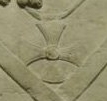
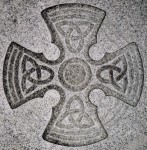
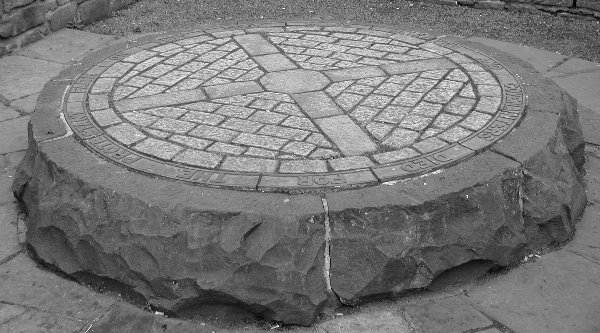
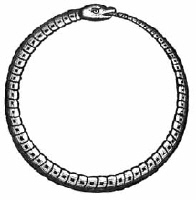
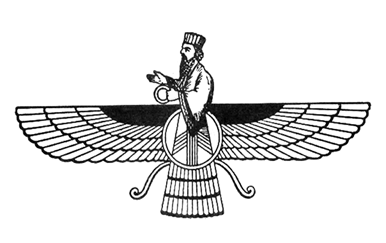
Below are several symbols that are
similar with their
respective representations or meanings. The
similarities are to coincidental
to not surmise a common pointy of origin. More
references will be added
as we find them
|
||||||||||||||||||
|
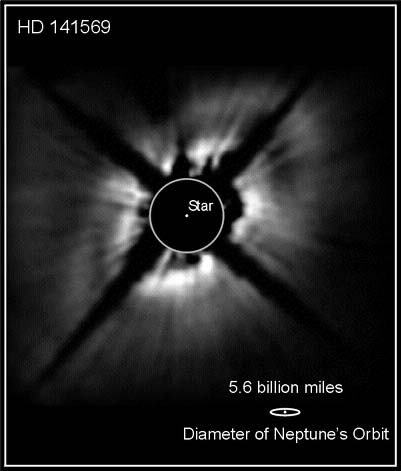
As a side note, here is a very interesting image that shows the same pattern, except that this time its in relation to an exploding star and the creation of new planets... Quite a coincidence...
Excerpt: Research by two University of Notre Dame astronomers may shed new light on how planets are formed. Terrence W. Rettig, professor of physics, and graduate student Sean Brittain report their findings in last Thursday's edition of the scientific journal Nature. Even though an Earth-like planet never has been detected outside the solar system, the formation process for these smaller planets is fairly well understood. Observations of infrared and radio emission from dust in space have revealed the presence of protoplanetary disks where dust grains likely accumulate to form rocky planets like Earth. It's a mystery, however, as to how gas giant planets, such as Jupiter and Saturn, form from the remaining primordial hydrogen and helium gas in the disk. The time scale as to how and when this occurs after the formation of Earth-like planets is unknown. |
||||||||||||||||||
| The Cosmic
Mountain and the Ziggurat
In the Avesta, reference is made to seven karshvar (Modern Persian keshvar), climes or zones, organizing the world map into a seven-storied ziggurat representing the cosmic mountain. The world is referred to as the haft keshvar. The word has also been translated as "region", "state" or "continent". The Avesta describes the karshvar as superimposed concentric circles one above the other, with increasing size, and an ocean separating each one from the next. The only karshvar inhabited by men is the seventh, Hvaniratha: 1. Arezahi,
Sufi traditions postulate an eighth clime, the "heavenly Earth" or "cosmic North". Avesta The Avesta is a collection of the sacred texts
of the Mazdaist (Zoroastrian)
religion. Although some of the texts are very old,
the term Avesta itself
only dates to the second century CE. The term's
etymological roots are
the middle Persian Abestañâg, old Persian
Upastâvaka,
"Praise [of God]".
|
||||||||||||||||||
| The Watershed:
Olmec Antecedents
The relationship between the Cosmic Mountain, the Sacred Tree, and the Milky Way is ancient and is a key to understanding later Izapan and Mayan cosmology. These concepts also play a central role in the astronomy and mythology of the Long Count end-date. At Izapa, it was volcano Tacana to the north which represented the Cosmic Creation Place... Olmec deities and motifs include: * The Olmec Dragon
|
||||||||||||||||||
| Stan Tenen - Meru Foundation | ||||||||||||||||||
| FAIR USE NOTICE: This page contains copyrighted material the use of which has not been specifically authorized by the copyright owner. Pegasus Research Consortium distributes this material without profit to those who have expressed a prior interest in receiving the included information for research and educational purposes. We believe this constitutes a fair use of any such copyrighted material as provided for in 17 U.S.C § 107. If you wish to use copyrighted material from this site for purposes of your own that go beyond fair use, you must obtain permission from the copyright owner. | ||||||||||||||||||
| ~ MENU ~ |