|
.
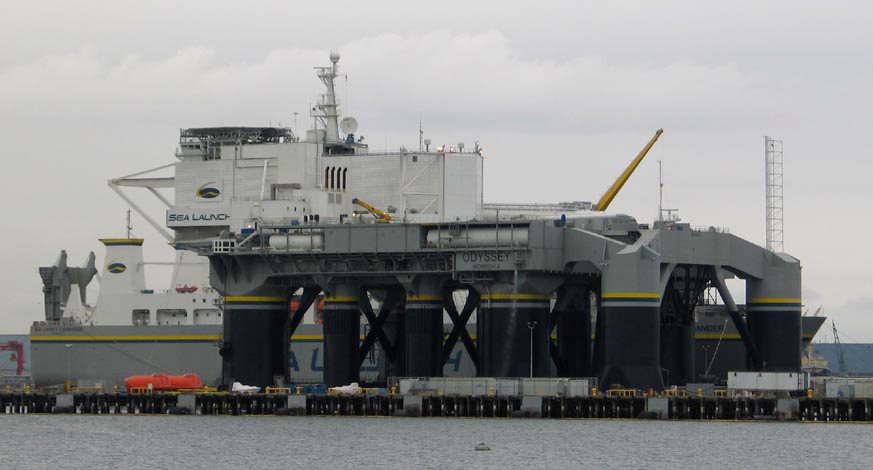
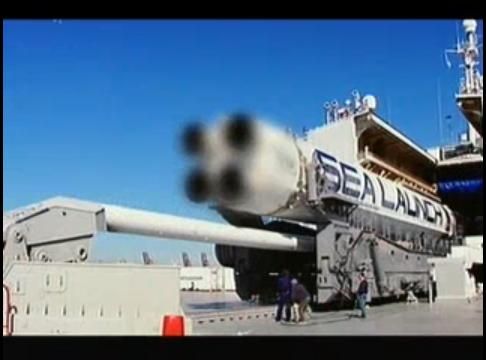
Photo Credit: Frank Leuband, Germany Sea Launch is a spacecraft launch service that uses a mobile sea platform for equatorial launches of commercial payloads on specialized Zenit 3SL rockets. As of January 2007 it had assembled and launched 24 rockets with two failures and one partial failure. The sea-based launch system means the rockets can be fired from the optimum position on Earth's surface, considerably increasing payload capacity and reducing launch costs compared to land-based systems. The Sea Launch consortium of four companies from the United States, Russia, Ukraine and Norway, was established in 1995 and their first rocket was launched in March 1999. It is managed by Boeing with participation from the other shareholders. SOURCE: Wikipedia |
|||||||||||||||||||||
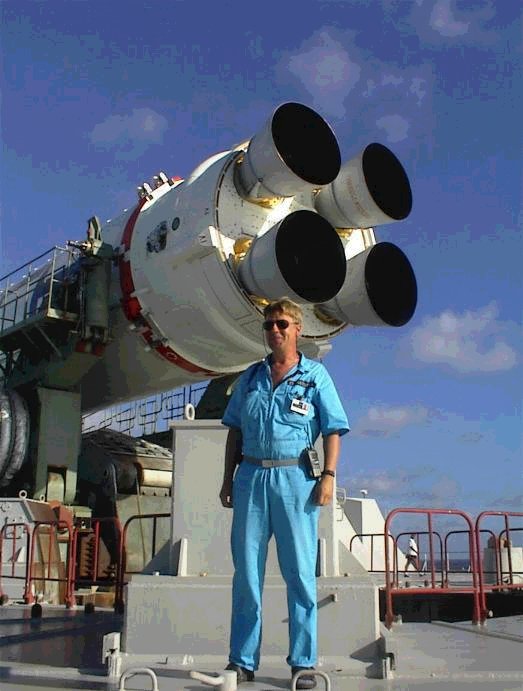
Photo Credit: Frank Leuband, Germany The launcher and its payload are assembled on a purpose-built ship Sea Launch Commander in Long Beach, California. It is then positioned on top of the self-propelled platform Ocean Odyssey and moved to the equatorial Pacific Ocean for launch, with the Sea Launch Commander serving as command center. Although Sea Launch is currently the world's only ocean-based space launch company, the idea is not unique: in 1964–1988 the University of Rome La Sapienza in Italy and NASA launched spacecraft from the San Marco platform off the coast of Kenya. Four companies from four countries share ownership
of Cayman Islands-registered Sea Launch
|
|||||||||||||||||||||
|
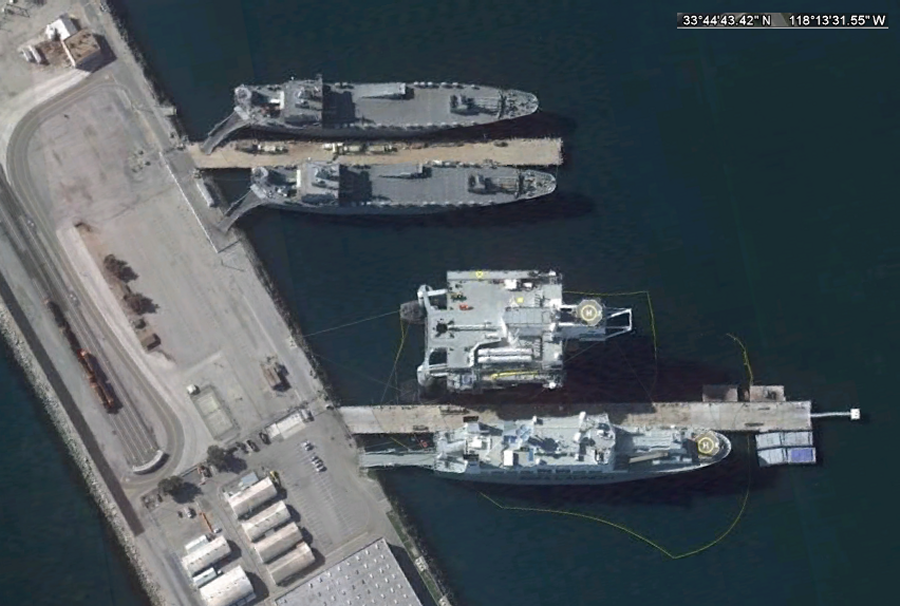
In It's Home Port 33°44'42"N 118°13'31.55"W ...
|
|||||||||||||||||||||
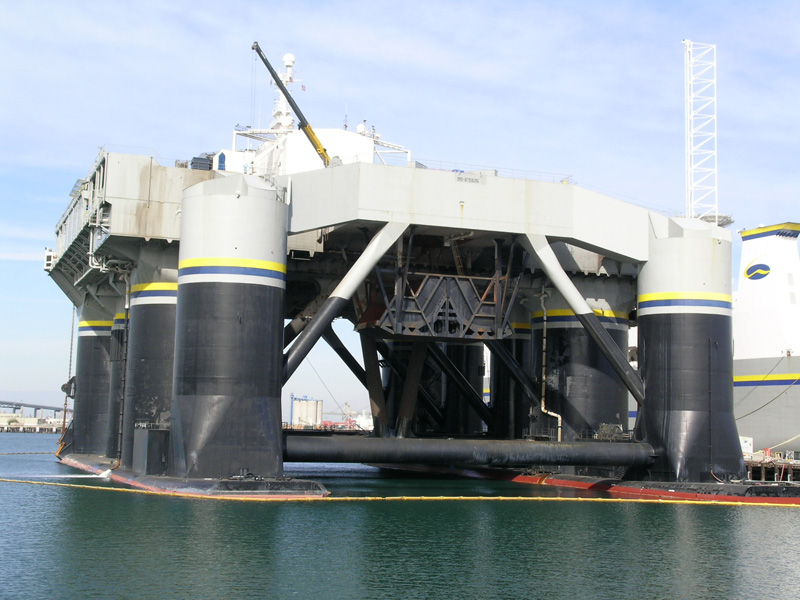
Transformed from a North Sea oil-drilling platform,
the Odyssey has special equipment that makes it a floating launch complex.
It is shown here in the Suez Canal as makes it way from Russia to California
in summer 1998.
|
|||||||||||||||||||||
|
.. Sea Launch is a spacecraft launch service that uses a mobile sea platform for equatorial launches of commercial payloads on specialized Zenit 3SL rockets. As of January 2007 it had assembled and launched 24 rockets with two failures and one partial failure. The sea-based launch system means the rockets can be fired from the optimum position on Earth's surface, considerably increasing payload capacity and reducing launch costs compared to land-based systems. The Sea Launch consortium of four companies from the United States, Russia, Ukraine and Norway, was established in 1995 and their first rocket was launched in March 1999. It is managed by Boeing with participation from the other shareholders. All commercial payloads have been communications satellites intended for geostationary transfer orbit with such customers as EchoStar, DirecTV, XM Satellite Radio, and PanAmSat. The launcher and its payload are assembled on a purpose-built ship Sea Launch Commander in Long Beach, California. It is then positioned on top of the self-propelled platform Ocean Odyssey and moved to the equatorial Pacific Ocean for launch, with the Sea Launch Commander serving as command center. SOURCE: BrunoTheQuestionable Youtube |
|||||||||||||||||||||
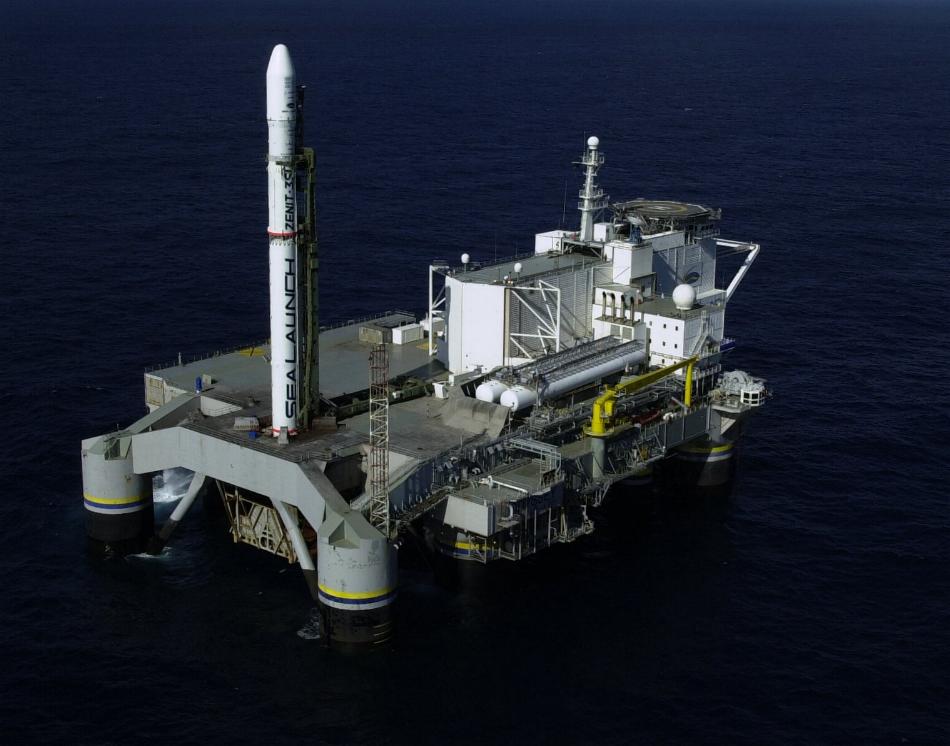
All Sea Launch missions to date have used the custom-designed three-stage Zenit-3SL launch vehicle, capable of placing up to six tonnes of payload in geosynchronous orbit. Sea Launch rocket components are manufactured by SDO Yuzhnoye / PO Yuzhmash in Dnipropetrovsk, Ukraine (Zenit rocket for the first and second stages); by Energia in Moscow, Russia (Block DM-SL for third stage); and by Boeing in Seattle, United States (payload fairing and interstage structure). Sea Launch rockets are assembled in Long Beach, California. The typical assembly is done onboard the Assembly and Command Ship (the payload is first tested, fueled and encapsulated in the Payload Processing Facility). The rocket is then transferred to a horizontal hangar on the self-propelled launch platform. Following rocket tests, both ships then sail about 4,828 km to the equator at 154° West Longitude, [show location on an interactive map] 0° N 154° W, in international waters about 370 km from Kiritimati, Kiribati. The platform travels the distance in about 11 days, the command ship in about eight days. With the platform ballasted to its launch depth, the hangar is opened, the rocket is automatically moved to a vertical position, and the launch platform crew evacuates to the command ship which moves about five kilometers away. Then, with the launch platform unmanned, the rocket is fueled and launched. |
|||||||||||||||||||||
The Sea Launch Partnership Sea Launch partners and their operational contributions are:
|
|||||||||||||||||||||
|
..
Photo Credit: MULTICONTROL SERVICES AB MARINE/OFFSHORE ENGINEERING ..
..
Photo Credit: MULTICONTROL SERVICES AB MARINE/OFFSHORE ENGINEERING |
|||||||||||||||||||||
|
Uploaded on Mar 20, 2008 NSS8 Launch Failure Video direct from webcast. |
|||||||||||||||||||||
|
..
Published on May 26, 2014 PROCESSING HIGHLIGHTS: http://youtu.be/XToDM_DeBdk The
Eutelsat 3B satellite was successfully launched into orbit today by a
Zenit 3SL rocket from the Sea Launch Odyssey platform positioned in the
Pacific Ocean. Liftoff occurred at 21:10 UTC, May 26th 2014, This was
the 36th Sea Launch launch and the first since a failure in 2013 with
the Intelsat 27 satellite.
Eutelsat 3B will be positioned at 3 degrees East alongside Eutelsat 3A and Eutelsat 3D and will provide video, data, Internet and telecom services across Europe, Africa, the Middle East, Central Asia and parts of South America. |
|||||||||||||||||||||
| FAIR USE NOTICE: This page contains copyrighted material the use of which has not been specifically authorized by the copyright owner. Pegasus Research Consortium distributes this material without profit to those who have expressed a prior interest in receiving the included information for research and educational purposes. We believe this constitutes a fair use of any such copyrighted material as provided for in 17 U.S.C § 107. If you wish to use copyrighted material from this site for purposes of your own that go beyond fair use, you must obtain permission from the copyright owner. | |||||||||||||||||||||
|
|