|
|
|||||||||||||||||
|
|
|||||||||||||||||
|
March 12, 2011 ..
Quake moved Japan coast 8 feet;
shifted Earth's axis
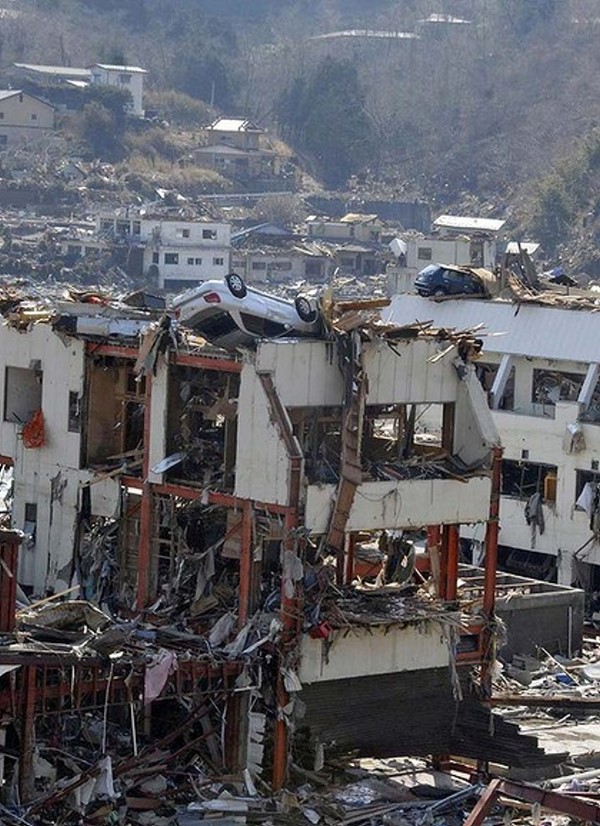
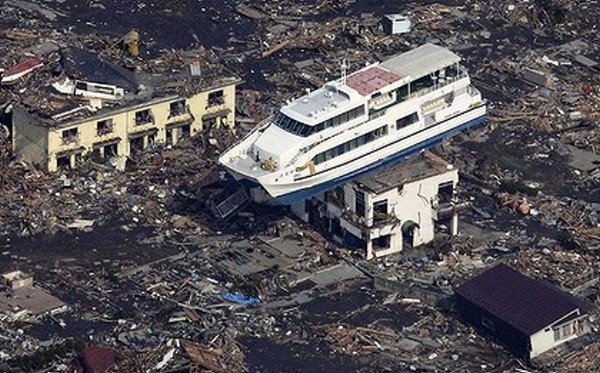
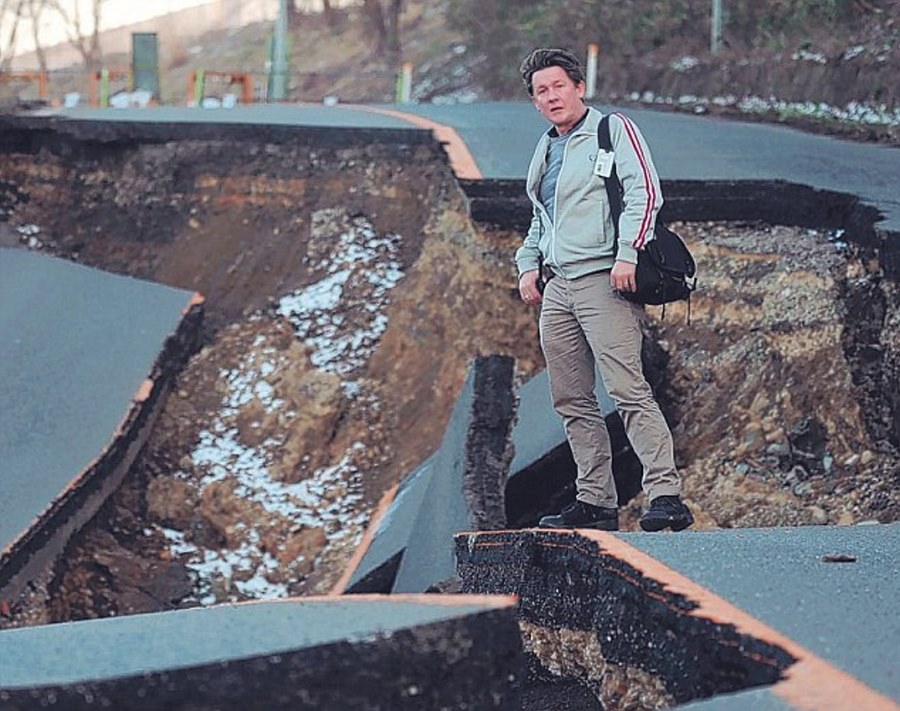
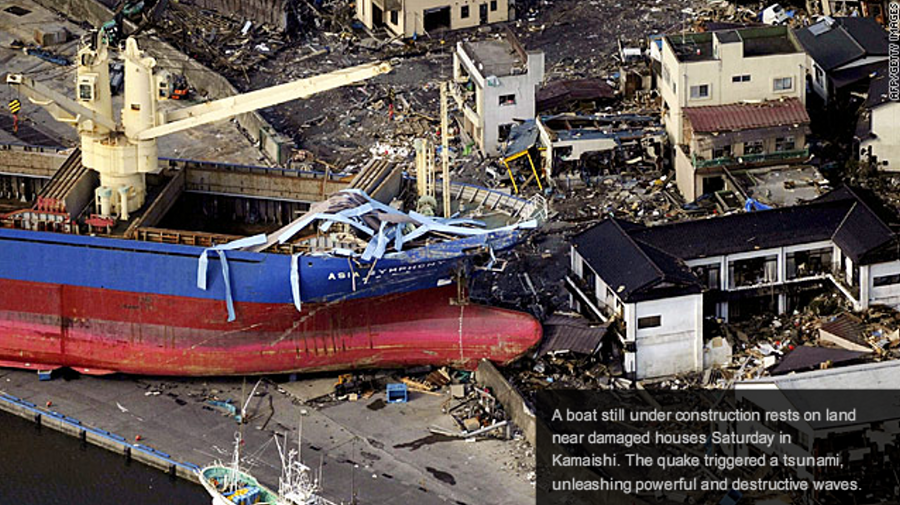
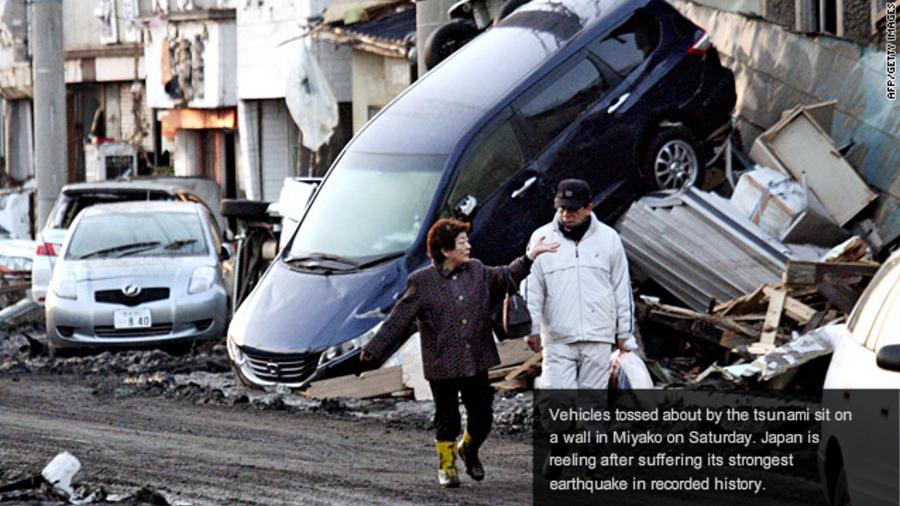
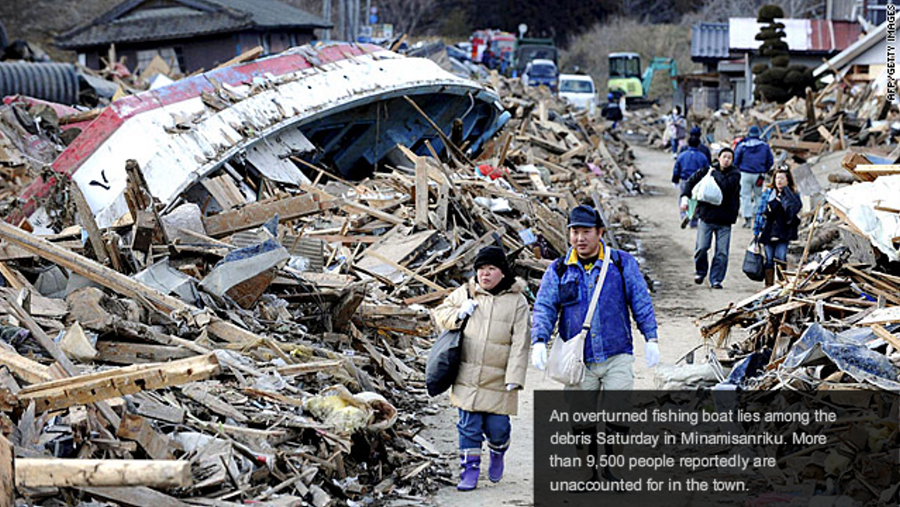
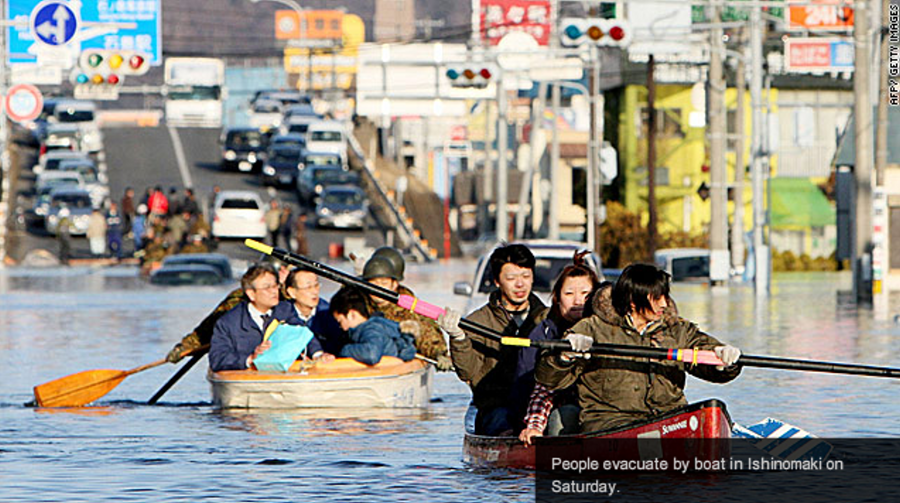
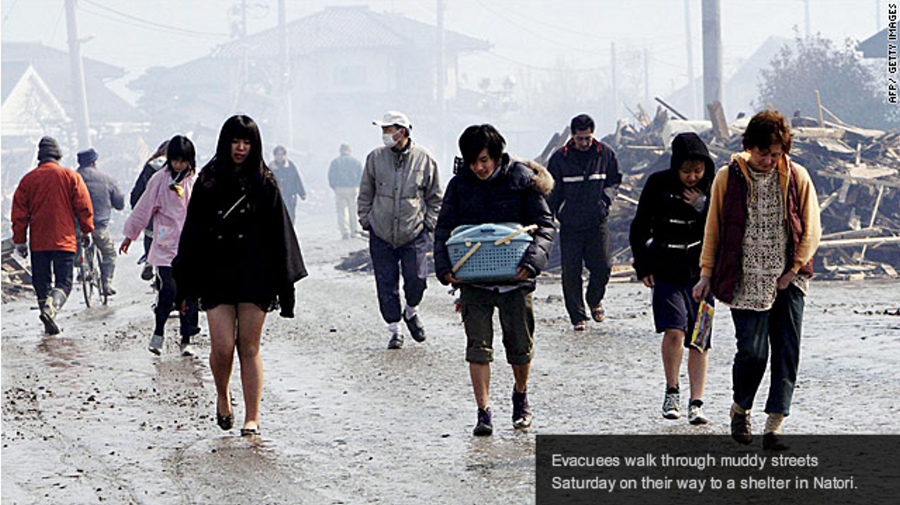
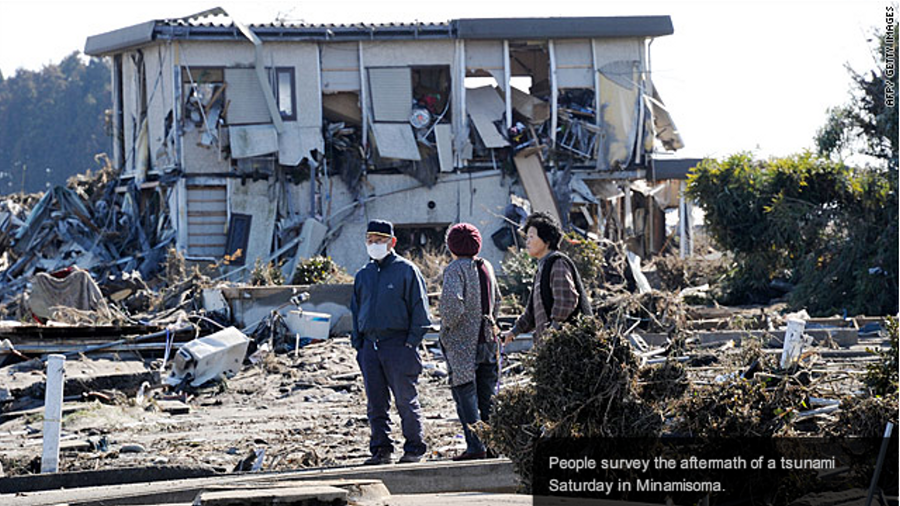
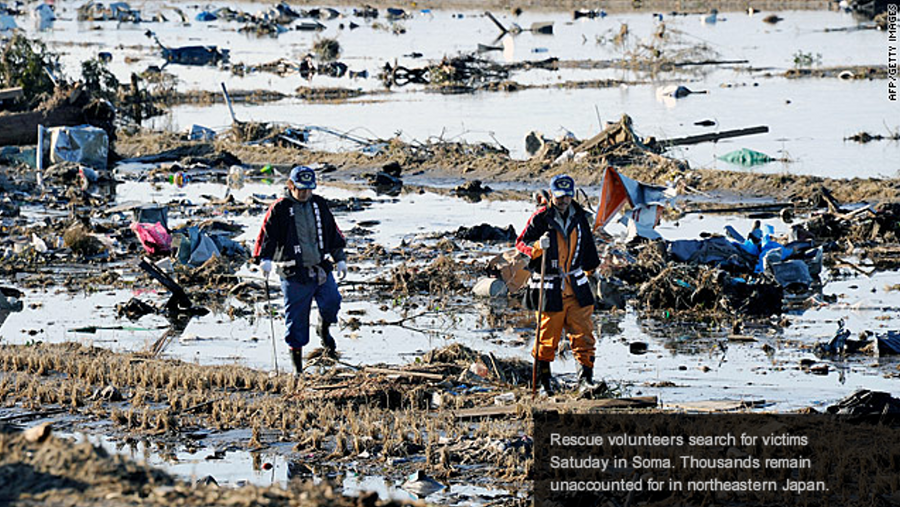
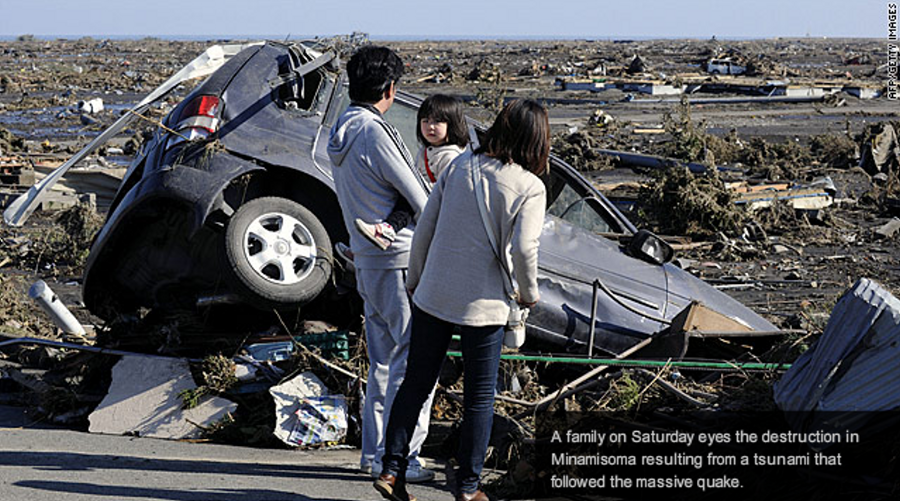
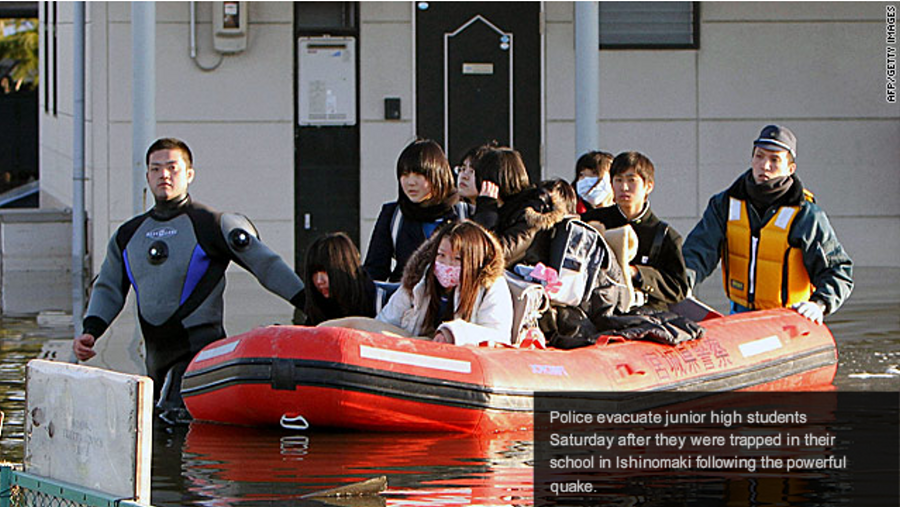
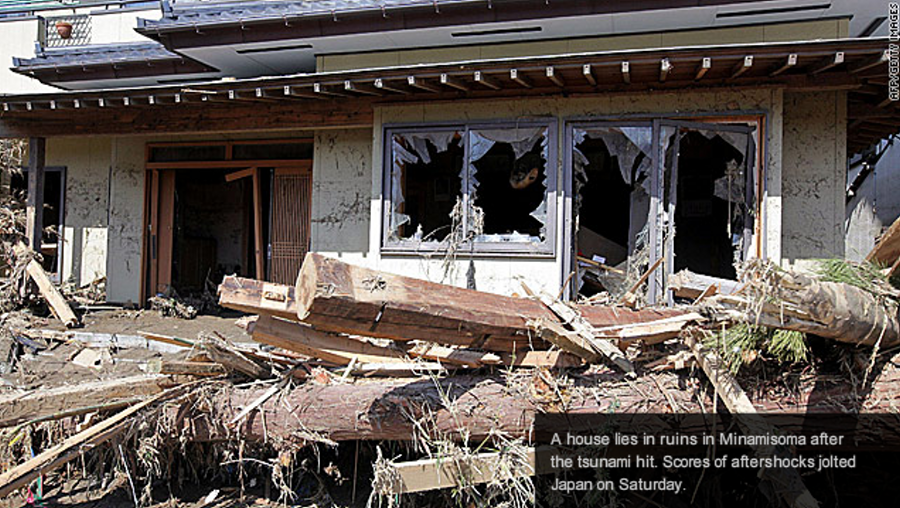
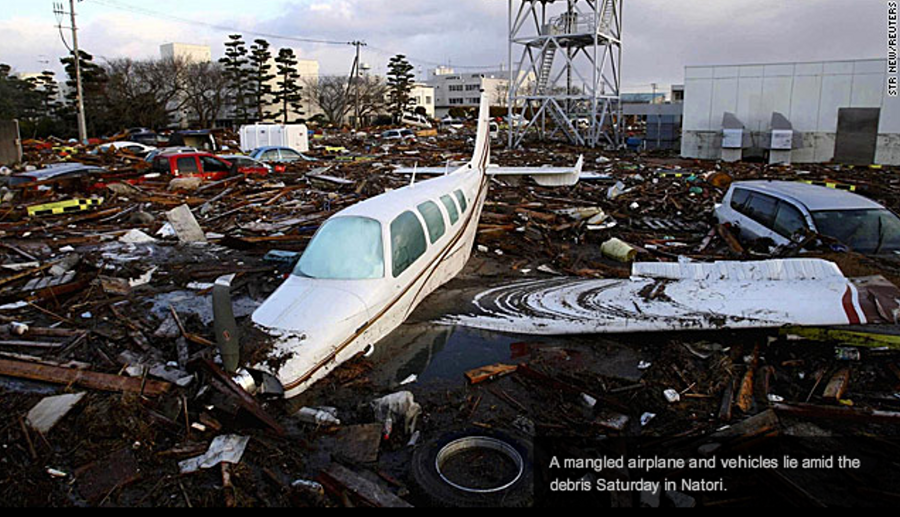
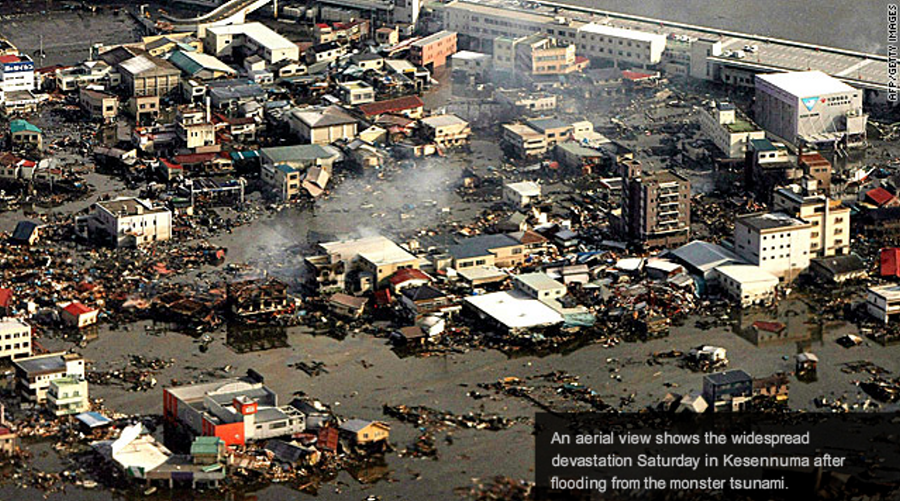
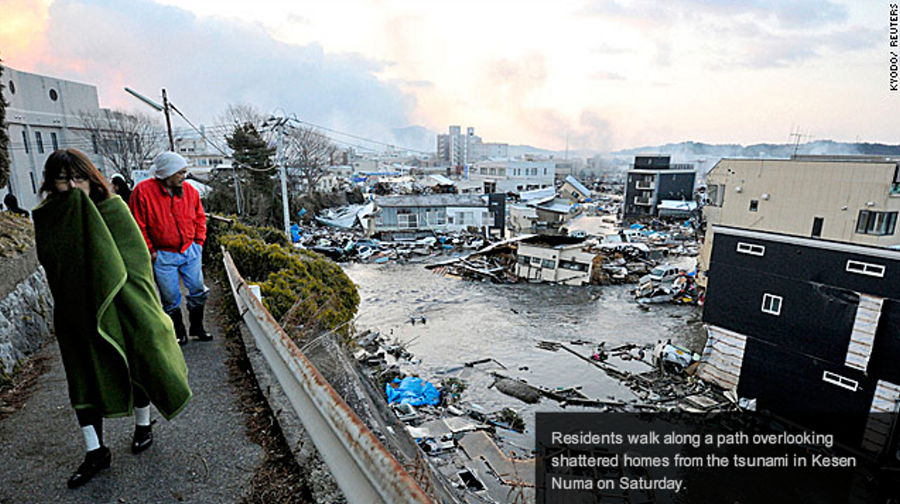
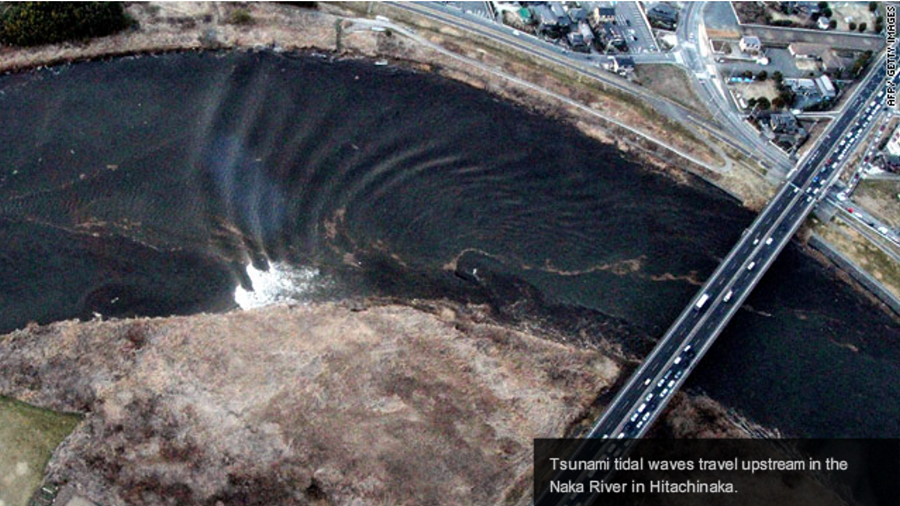
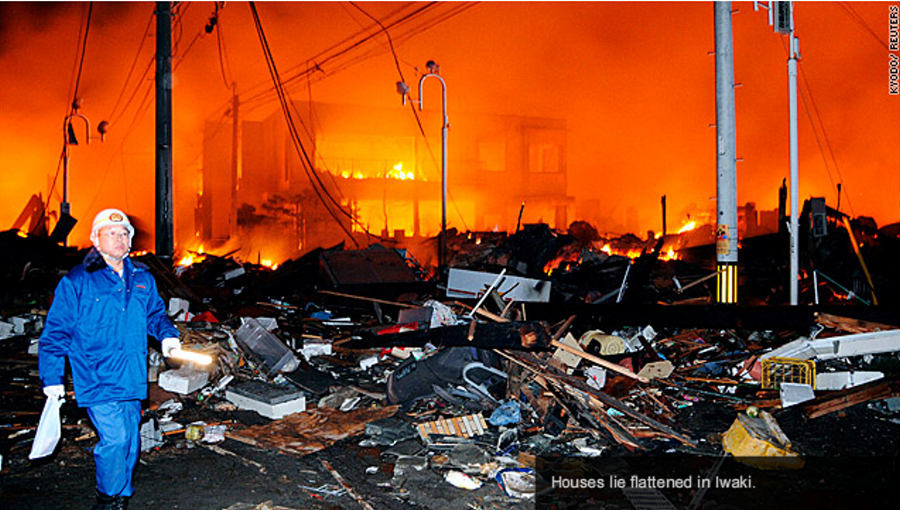
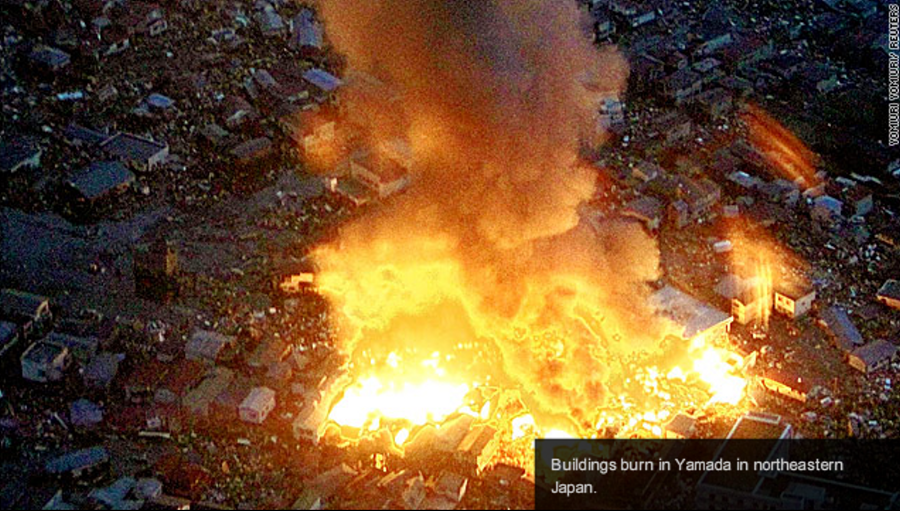
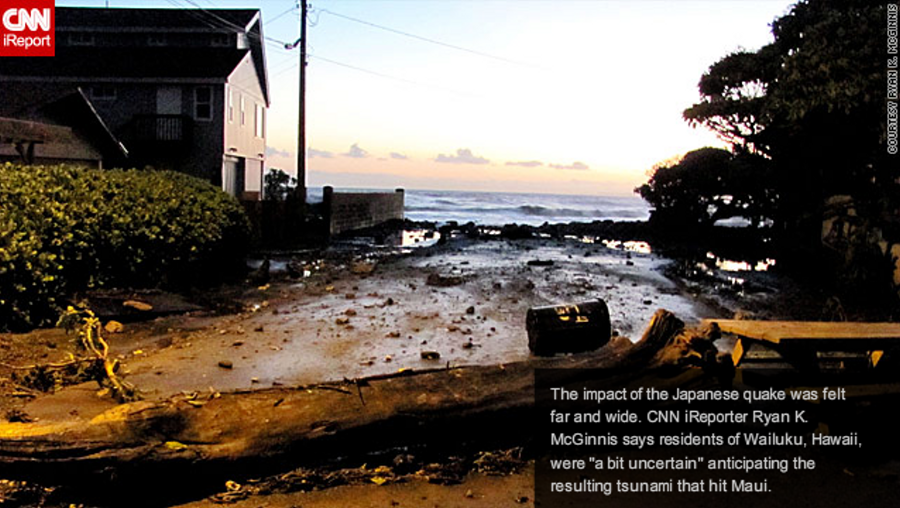
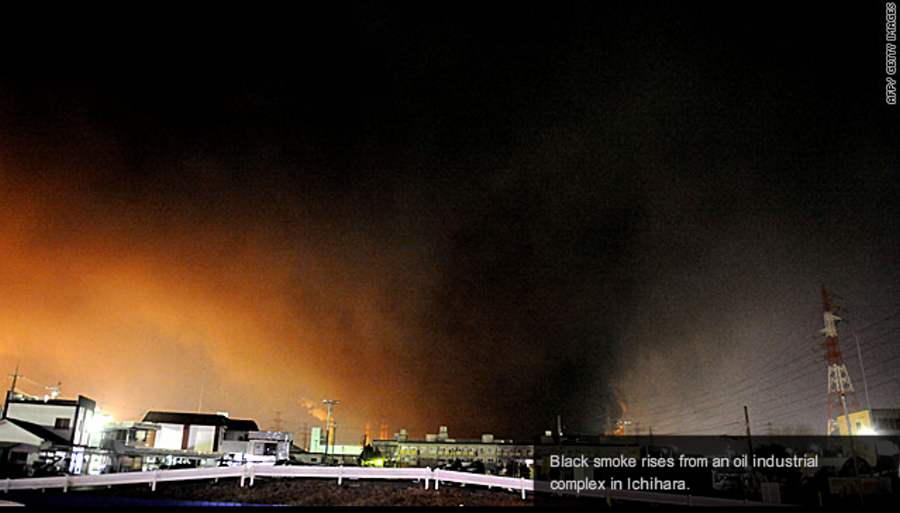
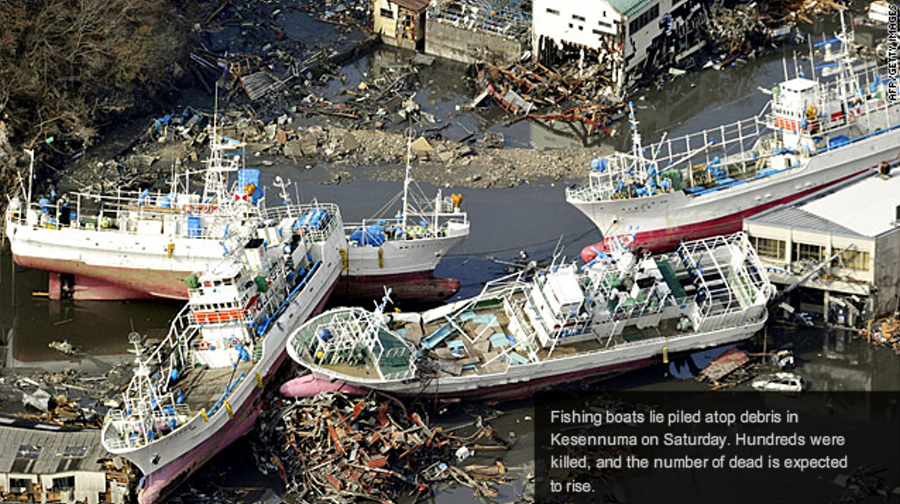
(CNN) -- The powerful earthquake that unleashed a devastating tsunami Friday appears to have moved the main island of Japan by 8 feet (2.4 meters) and shifted the Earth on its axis. "At this point, we know that one GPS station moved (8 feet), and we have seen a map from GSI (Geospatial Information Authority) in Japan showing the pattern of shift over a large area is consistent with about that much shift of the land mass," said Kenneth Hudnut, a geophysicist with the U.S. Geological Survey (USGS). Reports from the National Institute of Geophysics and Volcanology in Italy estimated the 8.9-magnitude quake shifted the planet on its axis by nearly 4 inches (10 centimeters). The temblor, which struck Friday afternoon near the east coast of Japan, killed hundreds of people, caused the formation of 30-foot walls of water that swept across rice fields, engulfed entire towns, dragged houses onto highways, and tossed cars and boats like toys. Some waves reached six miles (10 kilometers) inland in Miyagi Prefecture on Japan's east coast. The quake was the most powerful to hit the island nation in recorded history and the tsunami it unleashed traveled across the Pacific Ocean, triggering tsunami warnings and alerts for 50 countries and territories as far away as the western coasts of Canada, the U.S. and Chile. The quake triggered more than 160 aftershocks in the first 24 hours -- 141 measuring 5.0-magnitude or more. The quake occurred as the Earth's crust ruptured along an area about 250 miles (400 kilometers) long by 100 miles (160 kilometers) wide, as tectonic plates slipped more than 18 meters, said Shengzao Chen, a USGS geophysicist. Japan is located along the Pacific "ring of fire," an area of high seismic and volcanic activity stretching from New Zealand in the South Pacific up through Japan, across to Alaska and down the west coasts of North and South America. The quake was "hundreds of times larger" than the 2010 quake that ravaged Haiti, said Jim Gaherty of the LaMont-Doherty Earth Observatory at Columbia University. The Japanese quake was of similar strength to the 2004 earthquake in Indonesia that triggered a tsunami that killed over 200,000 people in more than a dozen countries around the Indian Ocean. "The tsunami that it sent out was roughly comparable in terms of size," Gaherty said. "[The 2004 tsunami] happened to hit some regions that were not very prepared for tsunamis ... we didn't really have a very sophisticated tsunami warning system in the Indian Ocean basin at the time so the damage was significantly worse." The Japanese quake comes just weeks after a 6.3-magnitude earthquake struck Christchurch on February 22, toppling historic buildings and killing more than 150 people. The timeframe of the two quakes have raised questions whether the two incidents are related, but experts say the distance between the two incidents makes that unlikely. "I would think the connection is very slim," said Prof. Stephan Grilli, ocean engineering professor at the University of Rhode Island. SOURCE: CNN |
|||||||||||||||||
Related
Links:
|
|||||||||||||||||
|
..
..
..
|
|||||||||||||||||
| Originally posted by zorgon
posted on 15-3-2011 @ 08:25 PM
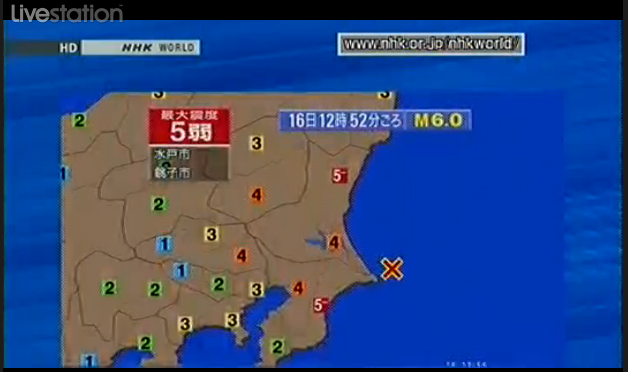
Breaking Earthquake warning in progress right now on NHK watching cameras for tremors
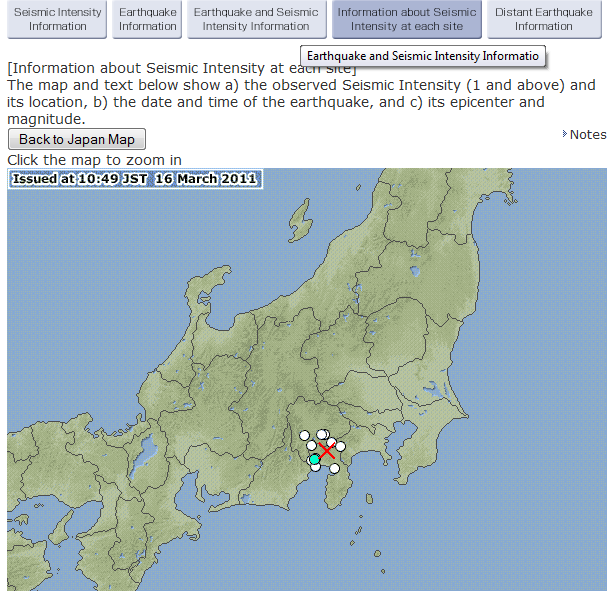
Activity at Mount Fuji
|
|||||||||||||||||
| Japan says radiation levels
rising around plant after explosion
By Taiga Uranaka and Ki Joon Kwon TOKYO, Japan, March 15 | Mon Mar 14, 2011 10:29pm EDT TOKYO, Japan, March 15 (Reuters) - Radiation levels around quake-stricken nuclear reactors in northeastern Japan are rising but there are no plans to extend the 20-km evacuation zone, the government said on Tuesday. An explosion at the No. 4 reactor likely caused the new radiation which could rise to levels that may affect health around the reactors. SOURCE: Reuters |
|||||||||||||||||
|
..
Huge blast at Japan nuclear power
plant
A powerful explosion has hit a nuclear power station in north-eastern Japan which was badly damaged in Friday's devastating earthquake and tsunami. A building housing a reactor was destroyed, but the authorities said the reactor itself was intact inside its steel container. The Japanese government has sought to play down fears of a meltdown at the Fukushima plant. It says radiation levels around the stricken plant have now fallen. A huge rescue and relief operation is under way in the region after the earthquake and subsequent tsunami, which are thought to have killed more than 1,000 people. Tokyo Electric Power said four of its workers had been injured in Saturday's blast at Fukushima, 250km (155 miles) north of Tokyo, but that their injuries were not life-threatening. An evacuation zone around the damaged nuclear plant has been extended to 20km (12.4 miles) from 10km, and a state of emergency declared. An estimated 200,000 people have been evacuated from the area, the International Atomic Energy Authority says. SOURCE: BBC
..
|
|||||||||||||||||
| Emergency declared at 2nd Japan
nuke plant after cooling fails
By Michael Winter, USA TODAY Update at 7:21 p.m. ET: Residents within a 2-mile radius of the Fukushima No. 2 plant have been ordered to evacuate, the government has announced. Here's the utility's latest update on the troubles at its overheating nuclear plants. Update at 6:36 p.m. ET: The Japanese government has declared a nuclear emergency at the Fukushima No. 2 power plant (Daini). An emergency also exists at plant No. 1 (Daiichi). Original post: The cooling system has failed for three reactors at the Fukushima No. 2 nuclear plant, about seven miles from its quake-crippled companion, the Tokyo Electric Power Co. now says. The utility, which operates both Fukushima plants, notified the government Saturday morning that the failsafe system at the No. 2 plant stopped working as the coolant water topped the boiling point, the Kyodo news service reports. SOURCE: USA Today |
|||||||||||||||||
|
screening after explosion in nuclear power station ..
Thousands undergo radioactive
screening after explosion in nuclear power station
The building housing one of Fukushima Dai-ichi's reactors was destroyed in the blast and a cloud of white smoke could be seen pouring from it. Four workers suffered fractures in the explosion, and three were treated for the symptoms of radiation sickness.
The Japanese government said the metal container sheltering the nuclear reactor was not damaged by the explosion. Spokesman Yukio Edano said the radiation around the plant had begun to decrease and that pressure inside the reactor was also going down.
The plant's cooling system had been damaged after the 9-magnitude earthquake struck yesterday and there were fears it could go into meltdown. More...
Footage on Japanese TV showed that the walls of the building had completely collapsed, leaving only a skeletal metal frame standing.
power plant after an explosion this morning - DailyMail ..
Fukushima Dai-ichi nuclear power plant - DailyMail ..
and there were fears the reactor could meltdown - DailyMail SOURCE: Daily Mail |
|||||||||||||||||
|
..
The Onagawa Nuclear Power Plant (女川原子力発電所, Onagawa genshiryoku hatsudensho?, Onagawa NPP) is a nuclear power plant in Onagawa in the Oshika District and Ishinomaki city, Miyagi Prefecture, Japan. It is managed by the Tohoku Electric Power Company. It was the most quickly constructed nuclear power plant in the world. The Onagawa-3 unit was the most modern reactor in all of Japan at the time of its construction. It was used as a prototype for the Higashidori Nuclear Power Plant. The plant conforms fully to ISO 14001, a set of international environmental management standards. The plant's waste heat water leaves 7 degrees Celsius higher than it came in and is released 10 meters under the surface of the water, in order to reduce adverse effects on the environment. All the reactors were constructed by Toshiba. Unit 1 Since November 11, 2006 this unit has been shut down due to the result of a test. Unit 2
The Onagawa Nuclear Power Plant was affected by the 2005 Miyagi earthquake and recorded vibrations above what the plant was designed for. Analysis after the event, however, found no damage to the reactor systems. Some people reported seeing smoke come from the plant after the earthquake and reported it, thinking that it indicated an accident, but the smoke was actually produced by the backup diesel generators. A fire from the turbine section of the plant following the 2011 Sendai earthquake was reported by Kyodo News. On March 13 2011 levels of radiation on site reached 21μSv/hour, a level at which Tohoku Electric Power Company were mandated to declare state of emergency, and they did so at 12:50, declaring the lowest-level such state. Within 10 minutes the level had dropped to 10μSv/hour. The company claimed this was due to radiation from the Fukushima I nuclear accidents and not from the plant itself. SOURCE: Onagawa Nuclear Power Plant
The International Atomic Energy Agency (IAEA), the U.N.'s nuclear agency, said earlier that Japan had declared a state of emergency at the Onagawa nuclear power plant. An investigation into the source of the over-the-limit radioactivity at the Onagawa power plant turned up a natural source: wind. The Onagawa nuclear power plant has three reactors. Authorities now say that the increased nuclear radiation around the Onagawa power plant is due to radioactive material blown from the neartby Fukushima Power Plant, which had one reactor unit explode on Saturday. The explosion appears to have been caused by a buildup of hydrogen gas in the containment unit around the reactor vessel. The reactor itself was not damaged, authorities say. Meanwhile, on Sunday, officials have announced that a second reactor at the Fukushima power plant is in danger of experiencing a similar explosion. Unit 3 is the latest of the reactors to be in danger. It was Unit 1 that exploded on Sunday. Experts have added that favorable winds will protect other nations from contamination. Winds will blow any radiation to the Pacific, in such a way as to avoid other nations, experts said. SOURCE: Michael Santo |
|||||||||||||||||
|
..
..
..
|
|||||||||||||||||
| March 13, 2011
Military Crew Said to Be Exposed to Radiation, but Officials Call Risk in U.S. Slight By WILLIAM J. BROAD The Pentagon was expected to announce that the aircraft carrier Ronald Reagan, which is sailing in the Pacific, passed through a radioactive cloud from stricken nuclear reactors in Japan, causing crew members on deck to receive a month’s worth of radiation in about an hour, government officials said Sunday. The officials added that American helicopters flying missions about 60 miles north of the damaged reactors became coated with particulate radiation that had to be washed off. There was no indication that any of the military personnel had experienced ill effects from the exposure. (Everyone is exposed to a small amount of natural background radiation.) But the episodes showed that the prevailing winds were picking up radioactive material from crippled reactors in northeastern Japan. Ever since an earthquake struck Japan on Friday, the authorities worldwide have been laying plans to map where radioactive plumes might blow and determine what, if any, danger they could pose to people. Blogs were churning with alarm. But officials insisted that unless the quake-damaged nuclear plants deteriorated into full meltdown, any radiation that reached the United States would be too weak to do any harm. Washington had “hypothetical plots” for worst-case plume dispersal within hours of the start of the crisis, a senior official said Sunday. The aim, the official added, was “more to help Japan” than the United States, since few experts foresaw high levels of radiation reaching the West Coast. For now, the prevailing winds over Japan were blowing eastward across the Pacific. If they continue to do so, international stations for radioactive tracking at Wake or Midway Islands might detect radiation later this week, said Annika Thunborg, a spokeswoman for an arm of the United Nations in Vienna that monitors the planet for spikes in radioactivity. “At this point, we have not picked up anything” in detectors midway between Japan and Hawaii, Ms. Thunborg said in an interview on Sunday. “We’re talking a couple of days — nothing before Tuesday — in terms of picking something up.” Agencies involved in the tracking efforts include the World Meteorological Organization, the International Atomic Energy Agency and the Comprehensive Test Ban Treaty Organization, which runs a global network of more than 60 stations that sniff the air for radiation spikes. In the United States, the Departments of Defense and Energy maintain large facilities and cadres of specialists for tracking airborne releases of radiation, both civilian and military. On Sunday, the Nuclear Regulatory Commission said it expected no “harmful levels of radioactivity” to move on the winds to Hawaii, Alaska or the West Coast from the reactors in Japan, “given the thousands of miles between the two countries.” In interviews, some private nuclear experts called a windborne threat unlikely. Others urged caution. “We’re all worrying about it,” said Robert Alvarez, a nuclear expert who, from 1993 to 1999, was a policy adviser to the secretary of energy, who runs the nation’s nuclear complex. “It’s going to be very important,” he added, “for the Japanese and U.S. authorities to inform the public about the nature of the plumes and any need for precautionary measures.” The plume issue has arisen before. In 1986, radiation spewing from the Chernobyl disaster in Ukraine was spread around the globe on winds and reached the West Coast in 10 days. It was judged more of a curiosity than a threat. Since then, scientists have refined their abilities to monitor such atmospheric releases. The advances are rooted in the development of new networks of radiation detectors, flotillas of imaging satellites and the advent of supercomputers that can model the subtle complexities of the wind to draw up advanced forecasts. With the Japanese crisis, popular apprehension has also soared. “Concern has been raised about a massive radioactive cloud escaping and sweeping over the West Coast,” said a recent blog, recommending whole grains and health foods for fighting radiation poisoning. On another blog, someone asked, “Should I take iodine now?” That referred to pills that can prevent poisoning from the atmospheric release of iodine-131, a radioactive byproduct of nuclear plants that the Japanese authorities have identified as escaping into the atmosphere. While federal officials expected little danger in the United States from Japanese plumes, they were taking no chances. On Sunday, Energy Department officials, speaking on the condition of anonymity, said the agency was working on three fronts. One main player is the Lawrence Livermore National Laboratory in California. Officials said they had activated its National Atmospheric Release Advisory Center, which draws on meteorologists, nuclear scientists and computer scientists to forecast plume dispersal. Separately, energy officials said the agency was readying plans to deploy two-person monitoring and sampling teams, if necessary. The teams would travel to consulates, military installations and Navy ships to sample the air in a coordinated effort to improve plume tracking. Finally, the department was preparing what it calls its Aerial Measuring System. Its detectors and analytical equipment can be mounted on a variety of aircraft. Officials said the equipment and monitoring team are staged out of the department’s Remote Sensing Laboratory at Nellis Air Force Base in Nevada, and are on two-hour call. “We’re on top of this,” a department official said. David E. Sanger contributed reporting from Washington. SOURCE: NEW YORK TIMES The New York Times Reprints
|
|||||||||||||||||
|
January 31, 2011 ..
Shinmoedake erupts: lava, ash
and lightning over Japan
|
|||||||||||||||||
| Report: Japan volcano erupts
in wake of catastrophic earthquake
The Meteorological Agency issued a warning Sunday saying
that Shinmoedake volcano resumed activity after a couple of quiet weeks;
it is unclear if the eruptions were linked to the quake.
The Meteorological Agency says a volcano in southern Japan is spewing ash and rock again as the country struggles with the aftermath of a catastrophic earthquake and tsunami in the north. The agency issued a warning Sunday saying that Shinmoedake volcano resumed activity after a couple of quiet weeks. The mountain is on Kyushu island, 950 miles (1,500 kilometers) from the epicenter of Friday's magnitude 8.9 earthquake and resulting tsunami, which devastated much of the country's northeastern coast. It was unclear if the eruptions were linked to quake. Japan lies on the Ring of Fire - an arc of seismically active zones where earthquake and volcanic eruptions are common. The full magnitude of Friday's natural catastrophe
is still unknown, as some 9,500 people are unaccounted for in one of the
worst-hit areas by the 8.9-magnitude earthquake in north-eastern Japan,
officials said.
Moreover, Kyodo news agency reported Saturday that more than 1,700 people are likely dead or missing following the massive earthquake and tsunami that hit Japan. About 300,000 people have been evacuated from their homes and that number is likely to rise with the government increasing the size of an evacuation area around two nuclear power plants in Fukushima in northern Japan, Kyodo said. Police accounts put the death toll at 637 and those missing at 653, but the total number is likely to be much bigger as 200-300 dead bodies were being transported in the city of Sendai and another 200 were being taken to gyms in other parts of Miyagi prefecture, Kyodo said. SOURCE: HAARETZ |
|||||||||||||||||
|
..
Russia's Zhirinovsky calls on
Japanese to move to Russia
Vladimir Zhirinovsky, the colorful and flamboyant leader of Russia's LDPR party, has called on Japanese to leave "the dangerous islands" and move to the unpopulated Russian territories, the newsru.com website reported on Sunday. Zhirinovsky, 64, also deputy speaker of the lower house, offered Russian government to start talks with Japan over Japanese nationals' migration to Russia. "In this case we do not share any islands, we offer the way to avoid a humanitarian catastrophe," newsru.com quoted Zhirinovsky as saying. "Russia will even benefit if such hardworking people join us," he added. The politician said he was serious since "the Japanese nation is under the threat of extinction in the near future." Zhirinovsky's statement came in the wake of a 9.0 - magnitude tremor, which struck the Japan's northeast on Friday. The quake triggered a 10-meter tsunami wave that swept away people, houses and cars. In late February Zhirinovsky invited Libyan leader Muammar Gaddafi to move to Moscow. In his address to Gaddafi, he said: "I invite you to make Moscow your place of permanent residence." MOSCOW, March 13 (RIA Novosti) SOURCE: RIA Novosti |
|||||||||||||||||
|
March 14, 2011 ..
nuclear plant before the explosions - Daily Mail ..
..
..
..
..
Fukushima I Nuclear Power Plant Reactor 3 explosion March 14, 2011 .. |
|||||||||||||||||
| Originally posted by okiecowboy
ATS
Post ID 10805818
Ok I am not as good providing well written and explained posts as Zorgon or TheRedneck so bear with me.. The Big picture as I see it I am going to ignore the reactors themselves for a bit and talk about the storage of the spent fuel rods and possible fire of same... In Japan the spent fuel rods are stored mainly at the plant, with a portion sent to another plant to reprocess... without posting the diagrams that have been posted many times before... spent fuel is stored within the reactor building in a swimming pool-like concrete structure near the top of the reactor vessel. This spent fuel must be kept underwater to prevent severe releases of radioactivity, among other reasons. A meltdown or even a fire could occur if there is a loss of coolant from the spent fuel pool. The water in the spent fuel pool and the roof of the reactor building are the main barriers to release of radioactivity from the spent fuel pool.Notice it said water and the roof are the main barriers...we have plants missing the roof and lack of water has been mentioned many times. Now the reason for the missing roof has been explained as a hydrogen build up due to venting from the steam to release pressure in the reactor. Hydrogen is generated in a nuclear reactor if the fuel in the reactor loses its cover of cooling water. The tubes that contain the fuel pellets are made of a zirconium alloy. Zirconium reacts with steam to produce zirconium oxide and hydrogen gas. Moreover, the reaction is exothermic – that is, it releases a great deal of heat, and hence creates a positive feedback that aggravates the problem and raises the temperature.So how much fuel are we talking here. it's hard to get the exact number but; The Fukushima Daiichi plant has seven pools for spent fuel rods. Six of these are (or were) located at the top of six reactor buildings. One “common pool” is at ground level in a separate building. Each “reactor top” pool holds 3450 fuel rod assemblies. The common pool holds 6291 fuel rod assemblies. [The common pool has windows on one wall which were almost certainly destroyed by the tsunami.] Each assembly holds sixty-three fuel rods. This means the Fukushima Daiichi plant may contain over 600,000 spent fuel rodsand; Japanese commercial nuclear power plants began operation in 1970. Currently there are 53 nuclear power plants in operation. To date close to 20,000 tons of spent nuclear fuel has been generated by Japan's nuclear power programStarting to get a warm fuzzy feeling yet? Now remember one of these reactors is using MOX fuel. which has been explained several times... Mox is a fuel that contains plutonium. Okay so what if we have a spent fuel fire, how bad can it be? Well this type of thing has been studied before, just not in Japan. We have some U.S. studies we will use; If a fire were to break out at the Millstone Reactor Unit 3 spent fuel pond in Connecticut, it would result in a three-fold increase in background exposures. This level triggers the NRC’s evacuation requirement, and could render about 29,000 square miles of land , according to Thompson. Connecticut covers only about 5,000 square miles; an accident at Millstone could severely affect Long Island and even New York CityAlso from the same article; Several events could cause a loss of pool water, including leakage, evaporation, siphoning, pumping, aircraft impact, earthquake, accidental or deliberate drop of a fuel transport cask, reactor failure, or an explosion inside or outside the pool building. Industry officials maintain that personnel would have sufficient time to provide an alternative cooling system before the spent fuel caught fire. But if the water level dropped to just a few feet above the spent fuel, the radiation doses in the pool building would be lethal.Again this study did not factor in MOX fuel and another article says; The consequences of severe spent fuel pool accidents at closed U.S. reactors were studied by the Brookhaven National Laboratory in a 1997 report prepared for the U.S. Nuclear Regulatory Commission. According to the results, the damages resulting from such accidents for U.S. Boiling Water Reactors could range from $700 million to $546 billion, which would be between roughly $900 million and $700 billion in today’s dollars. The lower figures would apply if there were just one old spent fuel set present in the pool to a full pool in which the spent fuel has been re-racked to maximize storage. Other variables would be whether there was any freshly discharged spent fuel in the pool, which would greatly increase the radioactivity releases. The estimated latent cancer deaths over the years and decades following the accident was estimated at between 1,300 and 31,900 within 50 kilometers (30 miles) of the plant and between 1,900 and 138,000 within a radius of 500 kilometers (300 miles) from the plant.So what if we have a spent fuel fire at plant number one? “That would be like Chernobyl on steroids,” said Arnie Gundersen, a nuclear engineer at Fairewinds Associates and a member of the public oversight panel for the Vermont Yankee nuclear plant, which is identical to the Fukushima Daiichi unit 1So let's pretend for a minute it does happen... and let's pick a number from the above listed report of 1000 square miles ( report said up to 29,000 miles... I went with a lower figure just cuz) Now to me uninhabitable means... Not Habitable ..ie.. get the heck out.. so a wide area becomes a ghost town. But wait a minute... we have important things in that area that have to be tended to and monitered right? Another nuke plant nearby right? And a plant at Onagwa that is already showing trouble... we can's just up and leave. Anyone remember the Tokai plant? It is a small reconversion plant with a little fame already. The Tokaimura nuclear accident (東海村JCO臨界事故, Tōkai-mura JCO-rinkai-jiko?, "Tōkai Village JCO Criticality Accident") was at the time Japan's worst civilian nuclear radiation accident. It took place on 30 September 1999 at a uranium reprocessing facility located in the village of Tōkai, Naka District, Ibaraki. The accident occurred in a very small fuel preparation plant operated by JCO (formerly Japan Nuclear Fuel Conversion Co.), a subsidiary of Sumitomo Metal Mining CoRemember all that MOX fuel we talked about before, that may or may not be in storage at the plant? Well within a not so far area of the plant that may or may not be dumping radiation out is Rokkasho Reprocessing Plant; The Rokkasho Reprocessing Plant (六ヶ所村核燃料再処理施設, Rokkasho Kakunenryō Saishori Shisetsu?) is a nuclear reprocessing plant with an annual capacity of 800 tons of uranium or 8 tons of plutoniumRokkasho has a Spent fuel storage pool that has already had trouble in the past; Other safety problems have plagued Rokkasho. Last year, the cooling system of its spent nuclear fuel storage pool temporarily failed. The ventilation system in the fuel storage building had problems. Last month, the fuel pool, which at that point contained more than 1,000 nuclear fuel assemblies, leaked coolant from a loose valve; it took workers more than 15 hours to identify and fix the problemDoes this sound like a area people can just up and walk away from? And this is just a partial list of man power critical list. So as this story unfolds and the evacuation zones keep expanding, think about what people may have to walk away from. |
|||||||||||||||||
|
..
..
|
|||||||||||||||||
| FAIR USE NOTICE: This page contains copyrighted material the use of which has not been specifically authorized by the copyright owner. Pegasus Research Consortium distributes this material without profit to those who have expressed a prior interest in receiving the included information for research and educational purposes. We believe this constitutes a fair use of any such copyrighted material as provided for in 17 U.S.C § 107. If you wish to use copyrighted material from this site for purposes of your own that go beyond fair use, you must obtain permission from the copyright owner. | |||||||||||||||||
|
|
Webpages © 2001-2011 Blue Knight Productions |