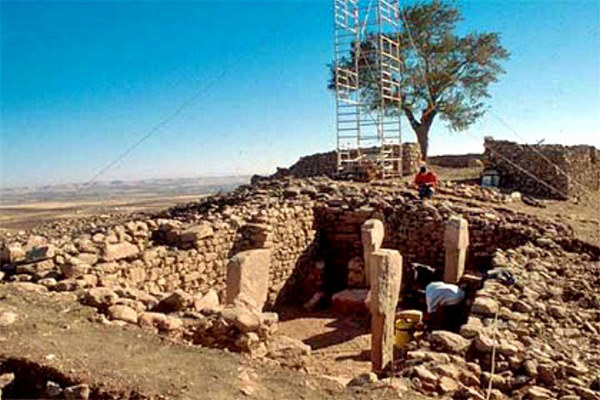
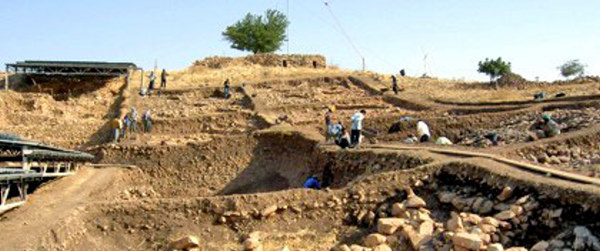
Excavated between 1995 and
2005 by Dr. Klaus Schmidt of the Deutsches
Archäologische Institut.
Judging
from the published drawings and photos,
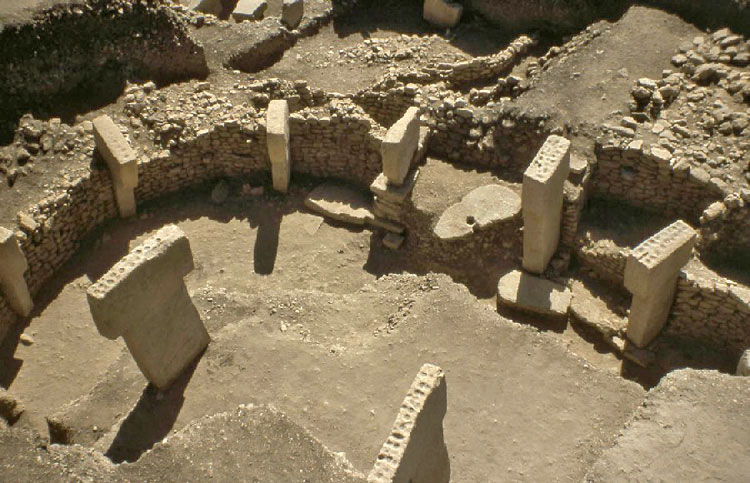
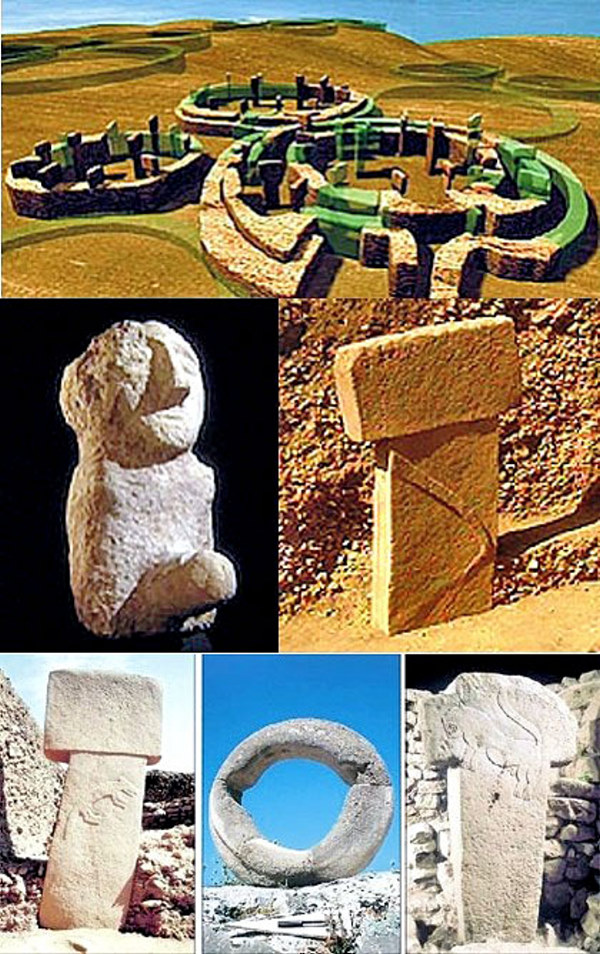
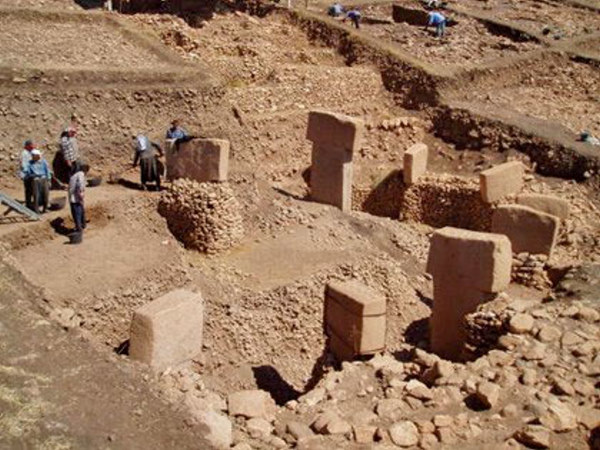
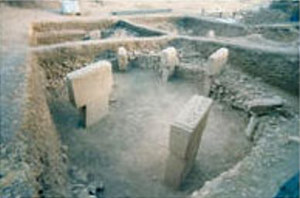
there are what appear to be 6 buildings
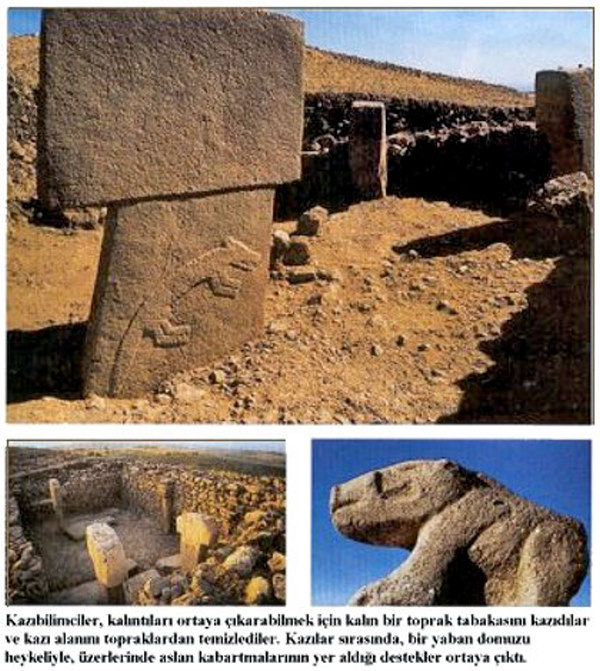
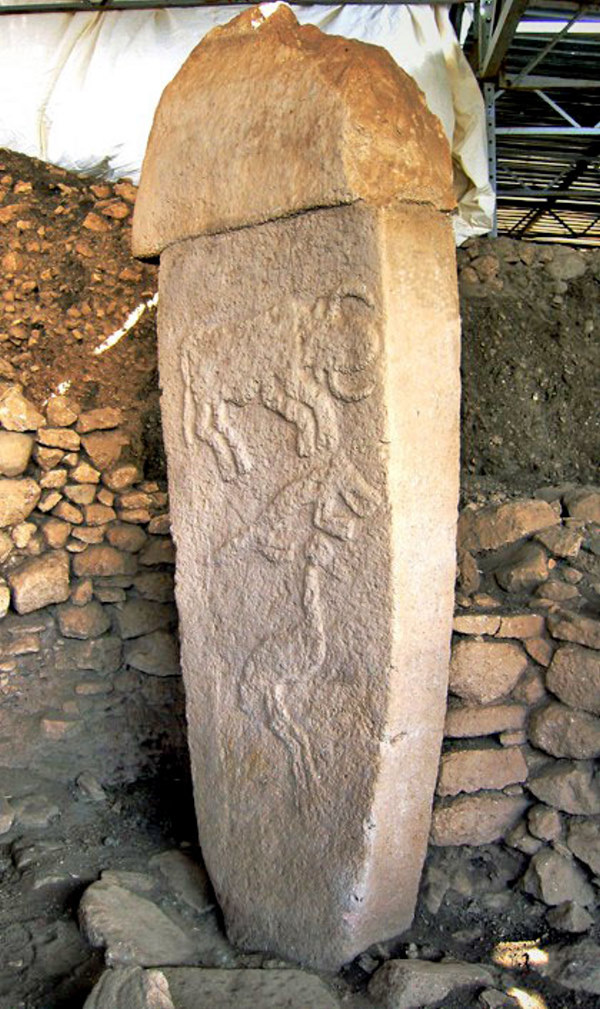
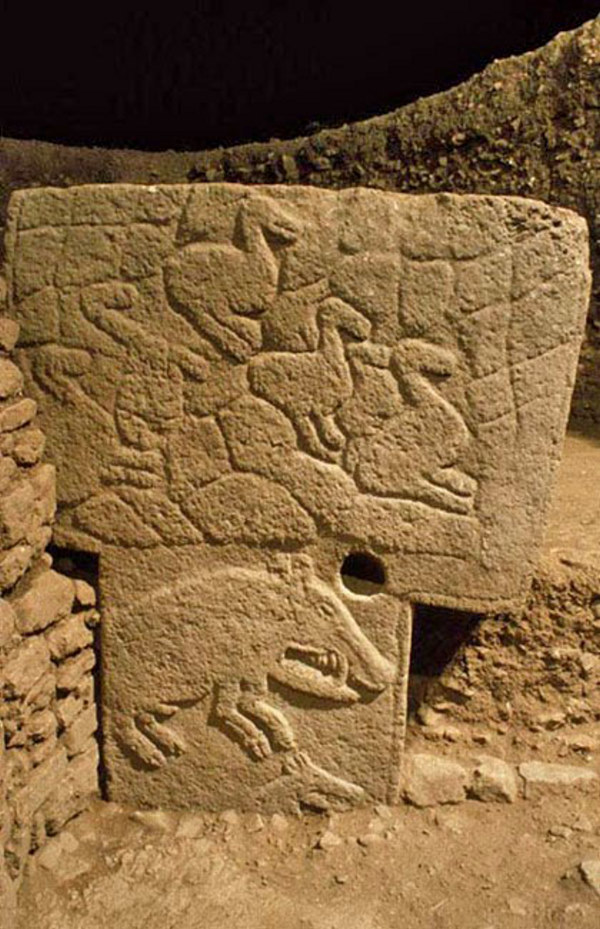
with elaborately carved T shaped
megalithic pillars, among others. There
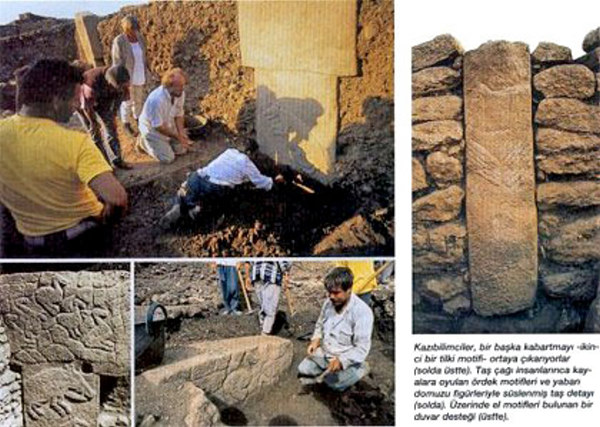
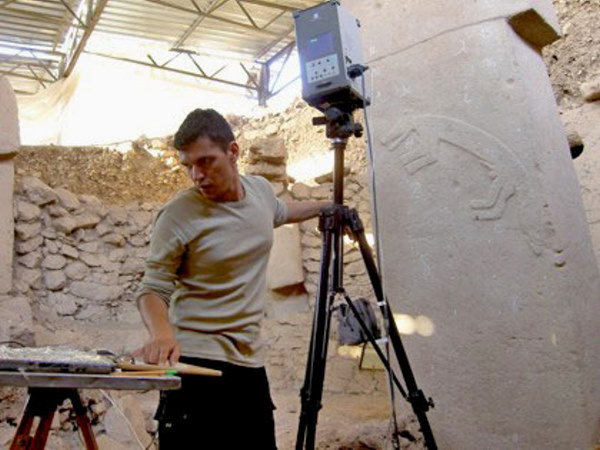
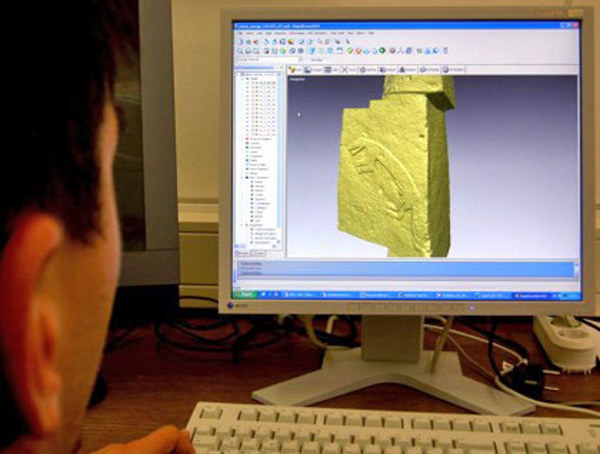
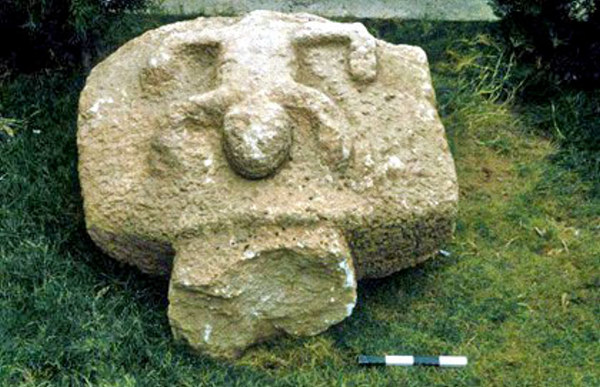
are numerous animal and mystical signs
engraved on the pillars, while the walls
are made of good masonry.
The
workmanship is much better than that
of significantly more recent
archaeological sites. One is reminded,
to some extent of the temples in Malta,
which were built 5,000 years later.
Some of the artifacts and at least one
pillar were taken to the museum in
Sanliurfa.
Dr.
Schmidt elaborately describes
the research and excavations in his
book "Sie Bauten Die Ersten Tempel,"
published by the C.H. Beck publishing
house in München in 2006.
The
title translates to "They built the
first temples." Dr. Schmidt is
working on the theory that temples
predated fixed settlements during the
early Neolithic. As of this time,
there was no answer to the question of
an English translation becoming
available in the near future.
..
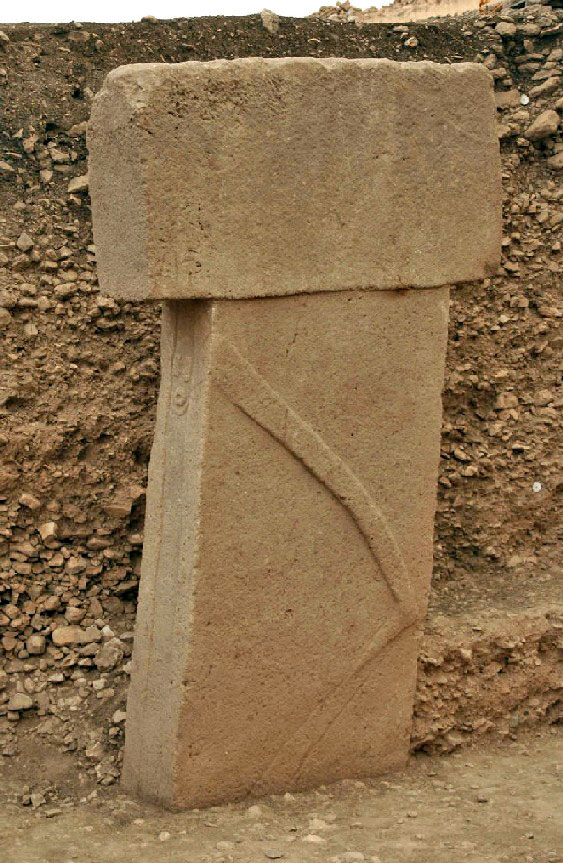
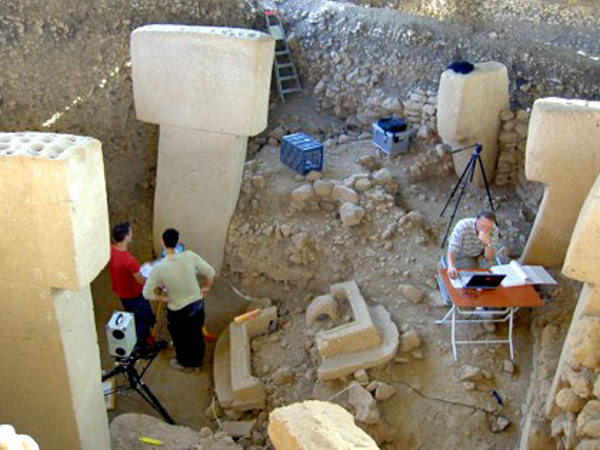
The central Pillar of
Segment D of Göbekli Tepe has
clearly recognizable engravings
representing arms of an
anthropomorphic character. There
is also an "H" symbol in the
corner. There are 5 more,
usually smaller such pillared
areas on this site, many of the
pillars having elaborate
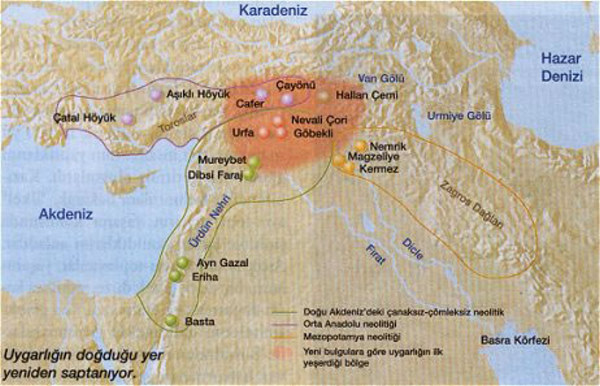
carvings. Göbekli Tepe is
apparently a Pre Pottery
Neolithic Temple dating back to
about 9,000 BCE near
SOURCE: http://www.bibliotecapleyades.net/arqueologia/gobekli_tepe04.htm