|
The Enigmas on Mars 18 |
|
|
Dune Buggy Tracks in Martian Crater?
Gullies and
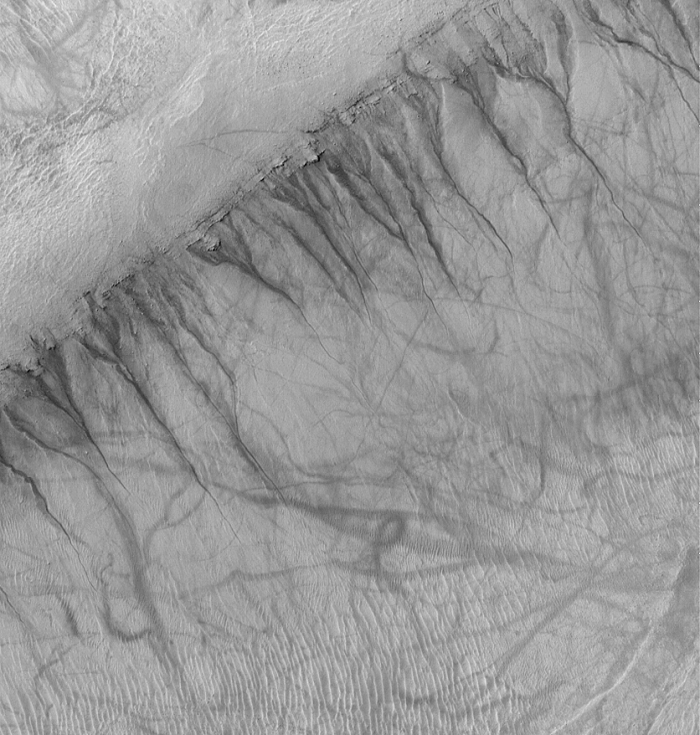
Streaks on Crater wall Kaiser This Mars Global Surveyor (MGS) Mars Orbiter Camera (MOC) image shows gullies emergent from a specific layer in the wall of an ancient crater within a much larger crater, Kaiser. Located at 46.4°S, 341.4°W, this picture obtained in early southern summer also shows a plethora of dark, and in some places squiggly, streaks. The streaks are thought to have been formed by the passage of dust devils that removed or disrupted a thin coating of dust from the surface. Such streaks commonly form at martian middle latitudes in late spring and early summer. The gullies in the crater wall were likely eroded by a fluid, perhaps water. This picture was obtained in January 2002; it covers an area 3 km (1.9 mi) across and is illuminated from the upper left. |
|
|
NASA APOD Martian Dust Devil Trails
Martian Dust
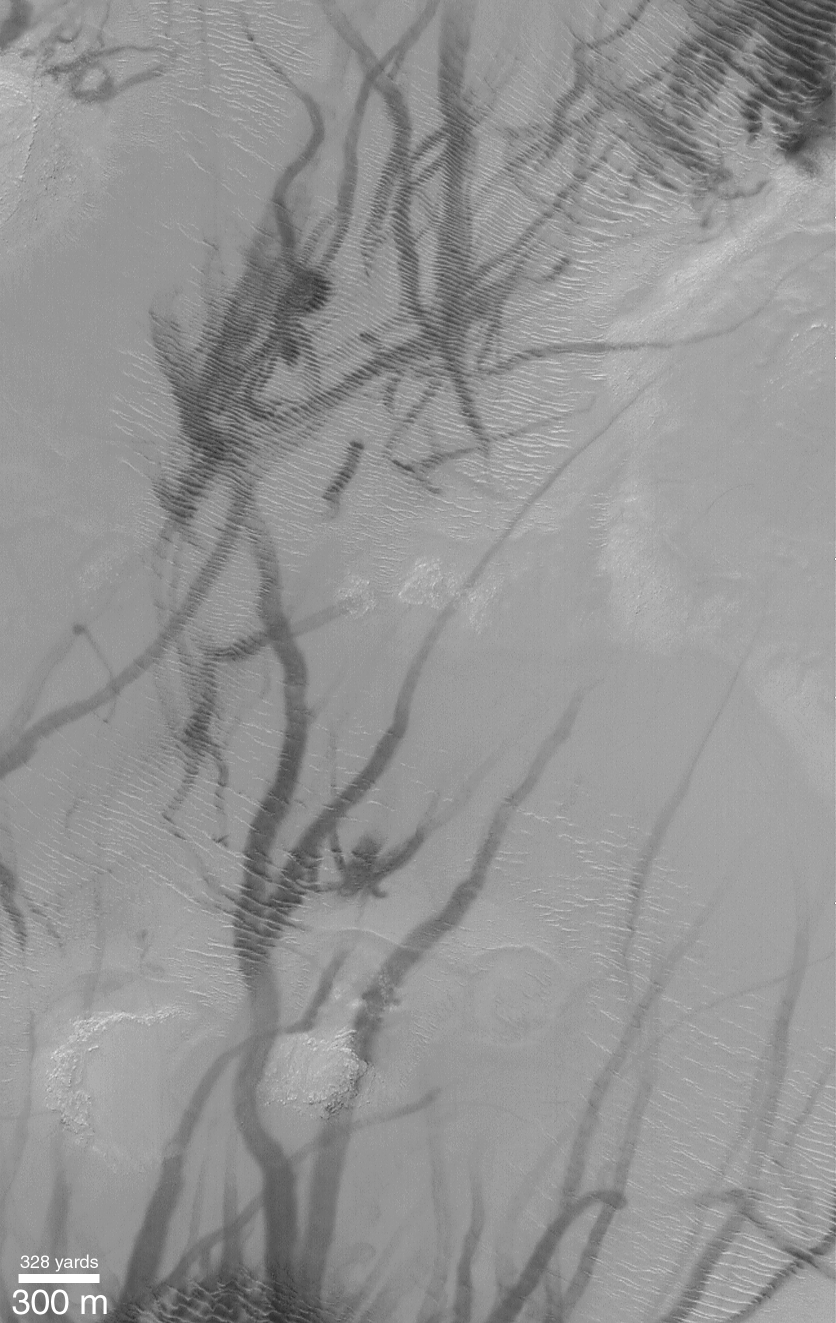
Devil Trails Explanation: Who's been marking up Mars? This portion of a recent high-resolution picture from the orbiting Mars Global Surveyor spacecraft shows twisting dark trails criss-crossing a relatively flat rippled region about 3 kilometers wide on the martian surface. Newly formed trails like these presented researchers with a tantalizing martian mystery but have now been identified as likely the work of miniature wind vortices known to occur on the red planet - martian dust devils. Another example of wind processes on an active Mars, dust devils had been detected passing near the Viking and Mars Pathfinder landers. Such spinning columns of rising air heated by the warm surface are common in dry and desert areas on planet Earth. Typically lasting only a few minutes, they becoming visible as they pick up loose dust. On Mars, dust devils can be up to 8 kilometers high and leave dark trails as they disturb the bright, reflective surface dust. |
|
|
NASA APOD A Dust Devil Crater on Mars
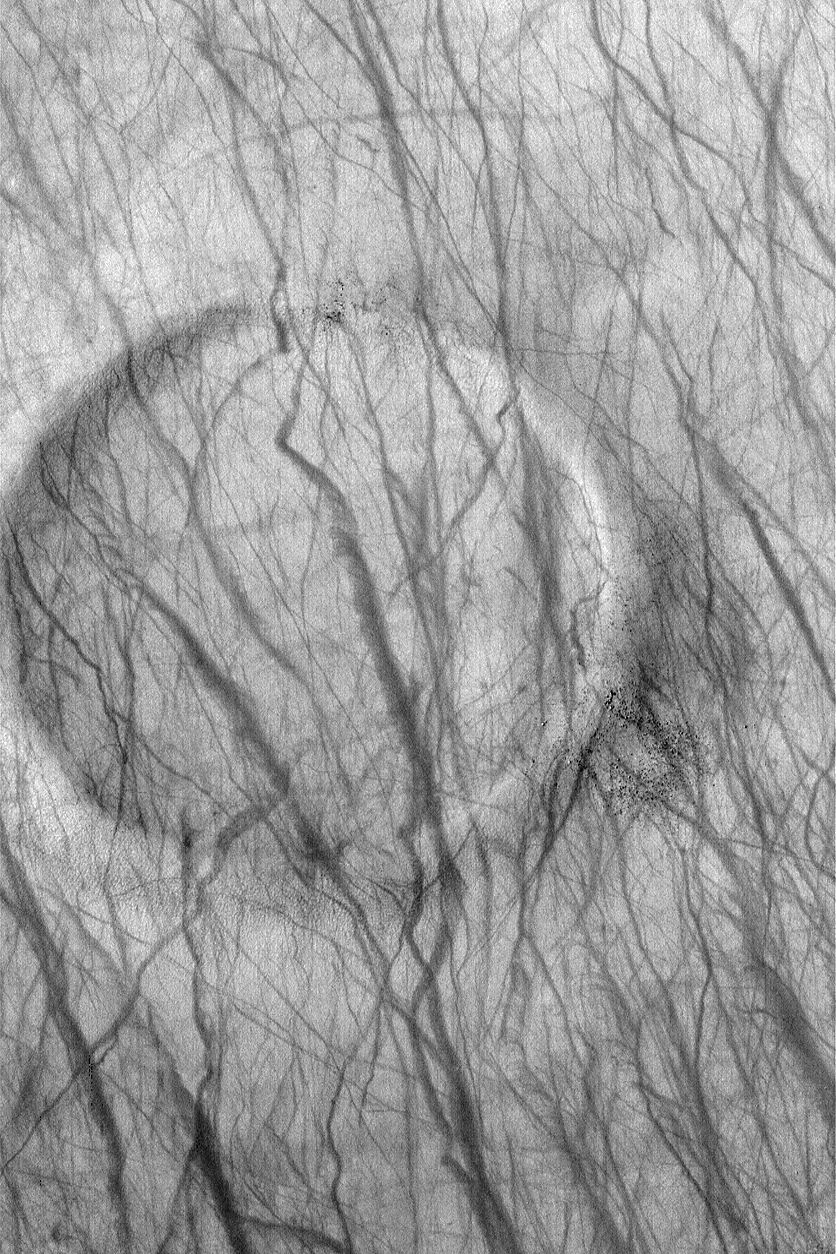
A Dust Devil
Crater on Mars Explanation: What caused the streaks
in this Martian crater? Since the above image shows
streaks occurring both inside and outside the
crater, they were surely created after the
crater-causing impact. Newly formed trails like
these presented researchers with a tantalizing
martian mystery but have now been identified as
likely the work of miniature wind vortices known to
occur on the red planet martian dust devils. Another
example of wind processes on an active Mars, dust
devils had been detected passing near the Viking and
Mars Pathfinder landers. Such spinning columns of
rising air heated by the warm surface are common in
dry and desert areas on planet Earth. Typically
lasting only a few minutes, they becoming visible as
they pick up loose dust. On Mars, dust devils can be
up to 8 kilometers high and leave dark trails as
they disturb the bright, reflective surface
dust. |
|
|
NASA APOD A Dust Devil on Mars Climbs Crater Wall
A Dust Devil
on Mars Explanation: Does the surface of Mars change? When inspecting yearly images of the Martian surface taken by the robot spacecraft Mars Global Surveyor currently orbiting Mars, sometimes new dark trails are visible. Although originally a mystery, the culprit is now usually known to be a dust devil, a huge swirling gas-cloud with similarities to a terrestrial tornado. Pictured above, a recent image has not only captured a new dark trail but the actual dust devil itself climbing a crater wall. Dust devils are created when Martian air is heated by a warm surface and begins to spin as it rises. Dust devils can stretch 8 kilometers high but usually last only a few minutes. |
|
|
Dust Devils Climbs Out of Crater
From image E16_01487.gif |
|
| FAIR USE NOTICE: This page contains copyrighted material the use of which has not been specifically authorized by the copyright owner. Pegasus Research Consortium distributes this material without profit to those who have expressed a prior interest in receiving the included information for research and educational purposes. We believe this constitutes a fair use of any such copyrighted material as provided for in 17 U.S.C § 107. If you wish to use copyrighted material from this site for purposes of your own that go beyond fair use, you must obtain permission from the copyright owner. | |
|
|