|
The Enigmas on Mars |
||||
|
.
The Blue Bird Files
Posted by zorgon, on April 9, 2007 at 10:04 GMT (ID: 3101480) I see a lot of images posted on the color issue on Mars... NASA shows what they call "real color" which are usually dark with a brownish reddish tint... The CP crowd shows us images where the scenery is as bright as any on Earth... Well they can't BOTH be right... NASA says... the enhanced color images are shown "as they would appear in Earth level light..." Okay I can buy that... if you had the same amount of sunlight on Mars as you do on Earth, then those images that show blue sky etc would in fact be true color... This makes sense ... But pray tell me how if you were standing on Mars that you would get the same level of light on Mars as you do on Earth? Last I checked the Sun was a LOT further away and appears a lot smaller in the Martian sky.... Do we just
ignore this minor
annoying detail? I can deal with that... as soon
as you show me where the
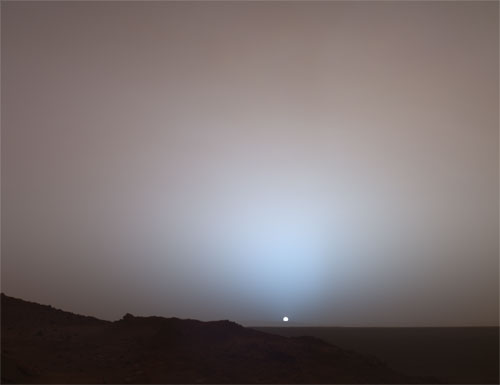
extra light comes from.... Yes the SKY IS BLUE on Mars... but it is darker because of the lack of sunlight, and because there are planet wide dust storms almost constantly... and its colder for the same reason... and unless we can add a new source of heat and light, nothing will change... Sunset on Mars...
|
||||
| Posted by zorgon, on April 10, 2007
at 13:07 GMT (ID:3104484)
quote:
Originally posted by
blue bird
Nah too many threads on Mars images
already hard to
keep up to date with all the finds LOL :P We need
one giant thread for
all of them... Breaking News.... Must see Video |
||||
| Posted by blue bird, on April 10,
2007 at 18:25 GMT
(ID:3105494)
zorgon - great animation...for a
moment I was landing
on Mars! quote:
Originally posted by
curiousbeliever
|
||||
| Posted by blue bird, on April 10,
2007 at 19:06 GMT
(ID:3105667)
quote:
Originally posted by
undo
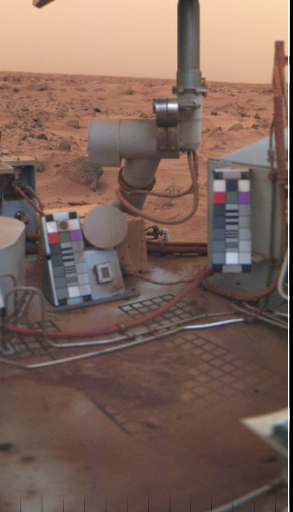
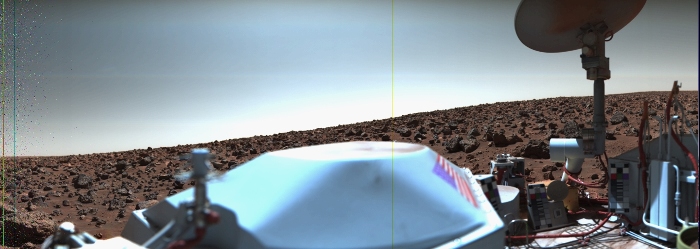
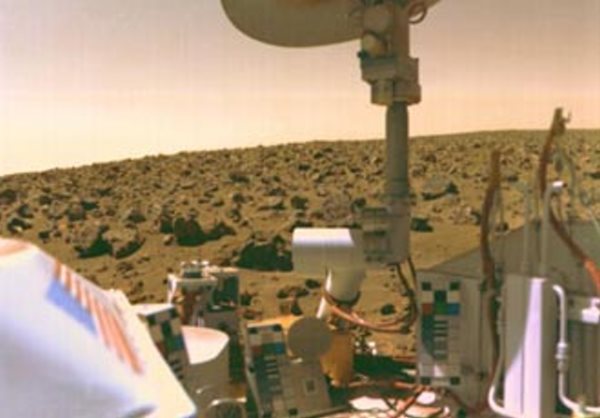
But look here colors on Viking image : coz - red is caused by storm, when storm is gone - colors are normal!! Excerpt "Temporary, the surface illumination
is really red,
caused by dust-storms, darkening the sky. The image
on the left was taken
shortly after or during such a storm and the diffuse
light with almost
no shadows is visible. In contrast to this, the
image on the right, shows
sharp shadows and clear blue sky, the normal
condition on Mars.
What is more than interesting is
'red' sky - but that
was not the case back in '76 as we can see from
Viking images - original
data no corection!!! - SOURCE
UPDATE
SOURCE: NASA Viking Mission |
||||
| Posted by Undo on 10-4-2007 @ 05:57
PM (ID:3105702)
*hands blue bird the smoking gun
award* |
||||
| Posted by zorgon, on April 11, 2007
at 05:49 GMT (ID:3106504)
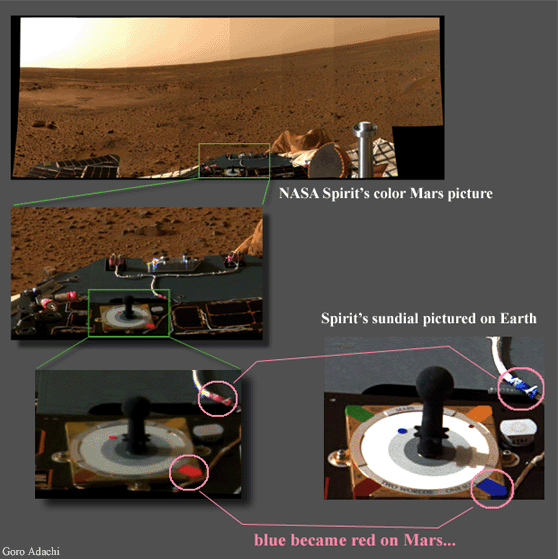
Well the one thing I have noticed is that while NASA shows the "red", those that try to convince us that the sky is "blue" do exactly the same thing NASA does, only in the other direction... Image one is clearly adjusted to show the darker red that NASA likes, while the other one is so clearly enhanced to the blue side that everything has a blue tint.... so neither image shows true color quote: by
Bluebird
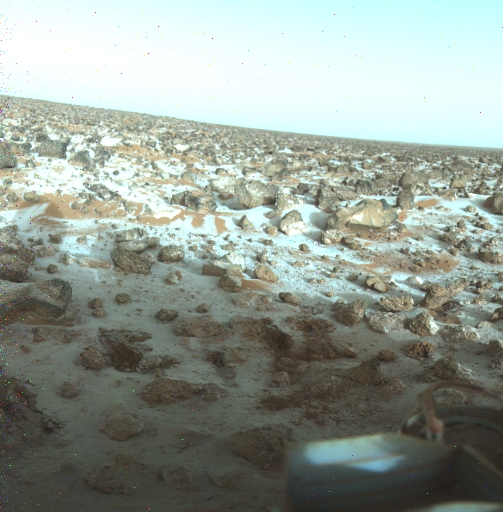
Only problem with that is that the Viking Rover shown in your image is blue as well... but it is really WHITE...
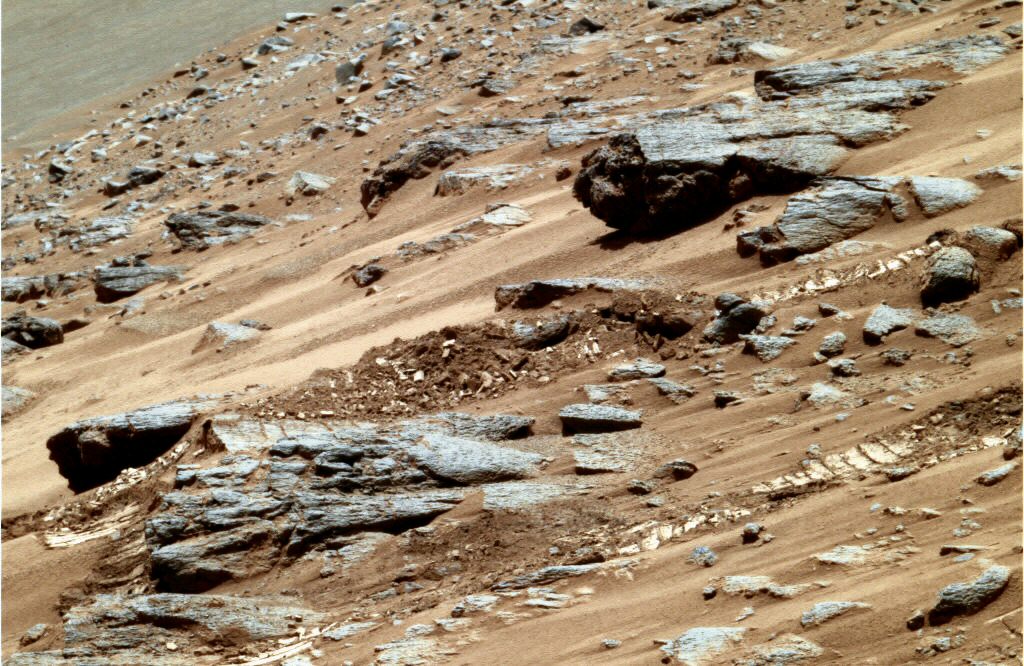
Now then I too have a Mars Color
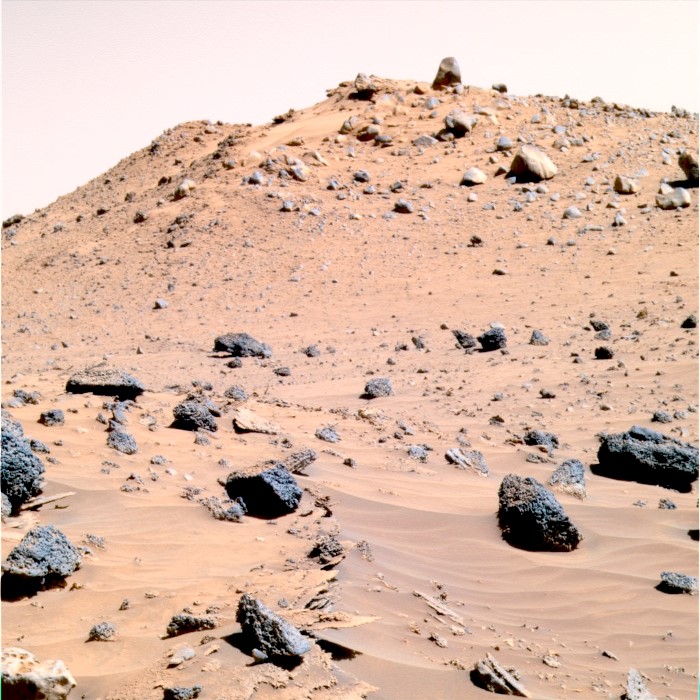
image... The image below taken by Spirit
Rover is one from NASA
and is "Radiometrically Calibrated" This image
represents true color on
Mars. These images are not generally released to the
public yet are not
difficult to find. However for the time being you
will have to track them
down yourself as we are not ready to hand over this
source just yet... Now I have done field work in
geology for most of my
life and the bluish black rocks and the sand in the
image below look just
like the volcanic Scoria, a type of Basalt in the
desert sands here in
Nevada... This summer I will go and take some photos
of the area so we
have a direct comparison.
In the meantime below is a small
sample of Scoria or
Vesicular Basalt. You can see the bluish black
natural color of this material
and it is readily found on Earth as one of the more
common lavas...
This gives me a pretty good
reference to be able to
see that the image above is indeed true color on
Mars... Now the image below... Mars or Earth... you decide...
|
||||
|
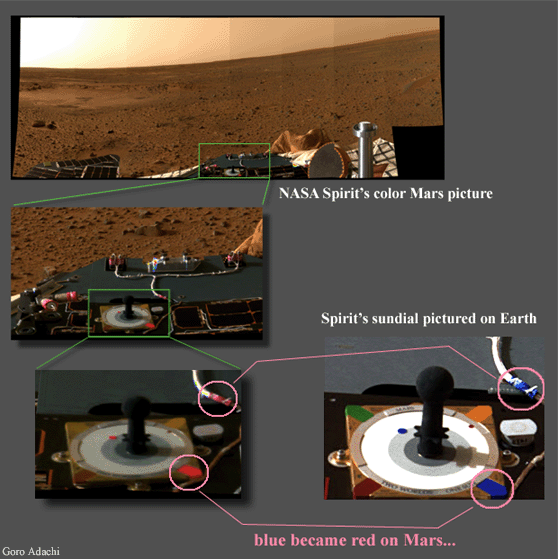
The "Sundial" ..
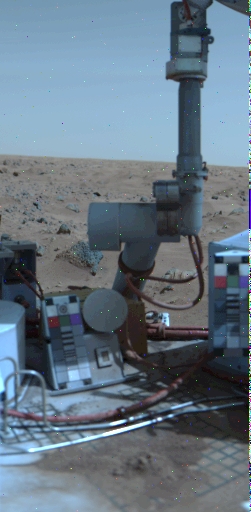
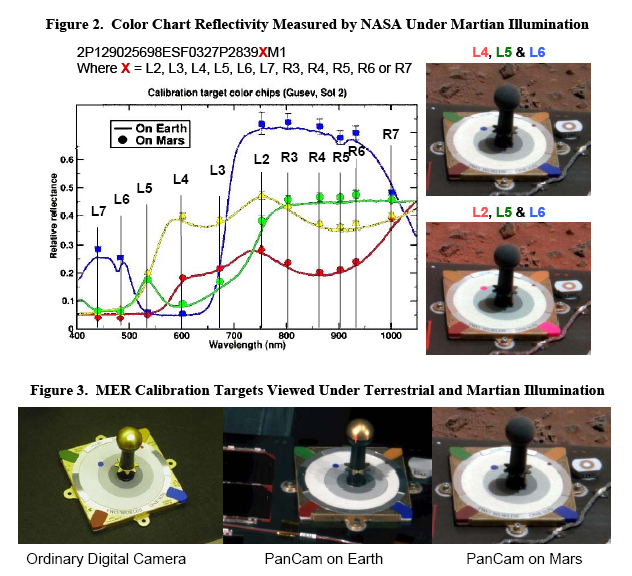
The Pancam does an acceptable job on
the red, blue,
and green panels; however, the yellow panel appears
orange in the Pancam
image. This may be a result of the unusual pigments
used on the calibration
target and the narrowness of the Pancam filters. The
image in Figure 3
on the far right shows the calibration target taken
by the Pancam on Mars.
The Pancam image on Earth and the Pancam image on
Mars appear quite similar.
This is not the result one would expect if the
illumination on Mars was
substantially redder than that on Earth.
Perhaps this is the best goal for the production of color imagery from Mars. Rather than search endlessly for the unknown illumination of the surface, the color calibration charts should be used to render the Martian scenery as it would appear on Earth. Martian objects would be more easily understood if they were illuminated by lighting conditions with which we are all familiar. In any case, the corrections for the Martian illumination are suspect. In any published final image, it is essential that the assumed illumination model be the same for the colored panels as it is for the gray. These panels are only centimeters apart and they are surely bathed identical illumination. 3. SUMMARY Images of the color calibration
chart taken on Mars
for the express purpose of verifying calibration
seem to be in reasonable
agreement with calibration images taken on Earth
under Earth-like illumination
conditions. However, calibration charts shown
inadvertently on production
panoramic images are not compatible with those
images made for the express
purpose of calibration. This incompatibility is in
two areas. First, the
gray panel pixel values, while having the same slope
in both images, have
substantially different offsets. A hypothesis of
variable illumination
is only expected to change the slope. The offset at
the darkest pixel values
should always be zero. Black pixels, which are at
the intercept, should
not be affected by illumination. The observed
offsets are preferential
to the red and minimize blue. However, in addition
to these unusual linear
changes, there is also observed a non-linear
suppression of blue reflectivity
in the L6 channel on the blue color panel. The L6
channel in the mosaic
panorama shows virtually no response on the blue
color panel.
Evaluation Report by Lockheed Martin http://mars.spherix.com/5555-30.PDF |
||||
| Posted by David2012 on 11-4-2007 @
04:16 PM (ID:3108122)
Posted about the red deviation
several times before Look up Keith Laney, for how he found the correct values for the different camera's (pathfinder's, viking's etc) and all of his corrected images. Also read what he says on his site about it.. it's not necessarily a devious intentional trick to color it red. Some real pretty images, I love the one with the rocks and ground covered with white "snow" the most...
|
||||
| Posted by zorgon, on April 11, 2007
at 18:39 GMT (ID:3108174)
quote:
Originally posted by
David2012
LOL NASA uses Red shift, Keith uses Blue shift ( as evident again by the blue color on the corner that shows a piece of the rover... So we will never see an "unshifted" image it seems : |
||||
| Posted by blue bird, on April 11,
2007 at 18:39 GMT
(ID:3108222)
quote:
Originally posted by
David2012
It's early morning thin layer of water frost, near Viking Lander 2 site. |
||||
| Posted by blue bird, on April 11,
2007 at 19:05 GMT
(ID:3108274)
quote:
Originally posted by
zorgon
Couldn't agree more! I found this on some forum - question about why are we not sending this camera setup to Mars ??? - t a k e n at 400 m i l e s above earth !!! |
||||
| Posted by zorgon, on April 28, 2007
at 13:54 GMT (ID:3151512)
quote:
Originally posted by
blue bird
Ah yes the Ikonos Satellite owned by Space imaging "GeoEye" They have a great poster and zoomable image of AREA 51 - GROOM LAKE I have posted this satellite before showing the Tsangpo River Gorge in full capability of this satellite... here it is again for those who missed it...(images of this quality cost thousands of dollars) (click for larger version) 
Here is the BIG PICTURE (slow load it takes 4 scans to complete) Now this company has one image of the oon and I wrote them asking if they had more images. They do not image the moon, and their website states simply. "We will not be taking photos of the moon.." Short sweet and to the point.. but it leaves me asking "Why?" Their answer was that the satellite was designed for Earth imaging... Yes we could easily put such a camera on a Lunar or Mars orbiter... and Department of Defense descriptions (as well as manufactures) state that they do indeed have such cameras out there... Its just that you and I won't get to
see those images
any time soon... |
||||
| Posted by blue bird, on April 12,
2007 at 10:51 GMT
(ID:3109598)
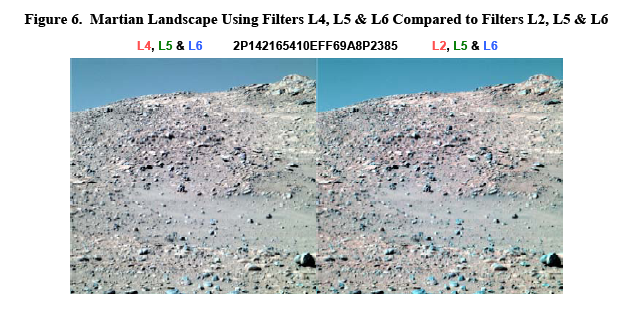
Here is Keith Laney - a
photo-processing expert - processed
Spirit picture from Mars:
but look at these panoramic images... Columbia Pan VFT web pan Source; Keith Laney
website
|
||||
|
.
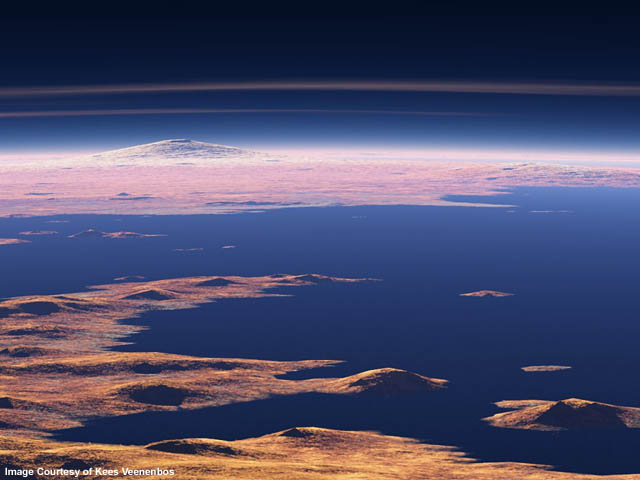
The Elsysium Mons seen from the Phlegra Montes |
||||
| FAIR USE NOTICE: This page contains copyrighted material the use of which has not been specifically authorized by the copyright owner. Pegasus Research Consortium distributes this material without profit to those who have expressed a prior interest in receiving the included information for research and educational purposes. We believe this constitutes a fair use of any such copyrighted material as provided for in 17 U.S.C § 107. If you wish to use copyrighted material from this site for purposes of your own that go beyond fair use, you must obtain permission from the copyright owner. | ||||
|
|