|
The Enigmas on Iapetus .. |
|
|
|
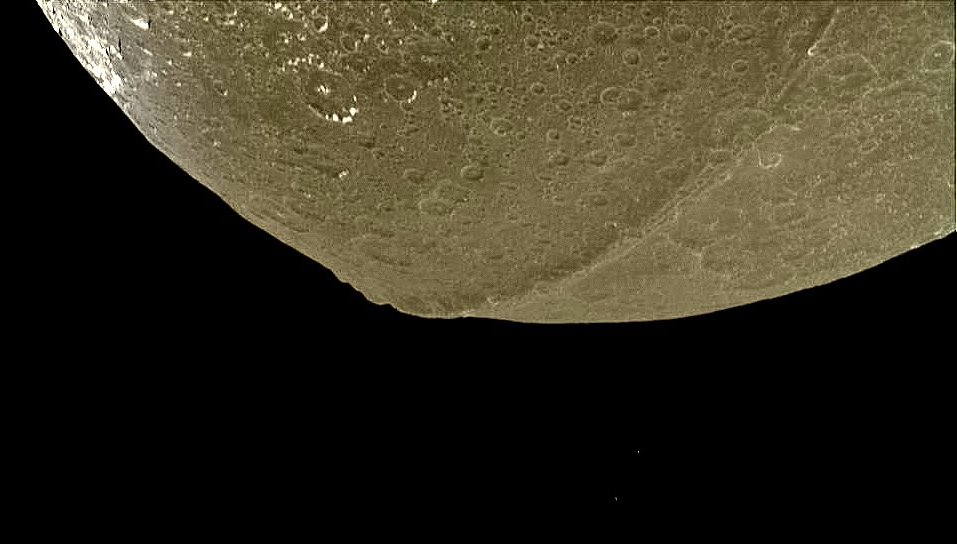
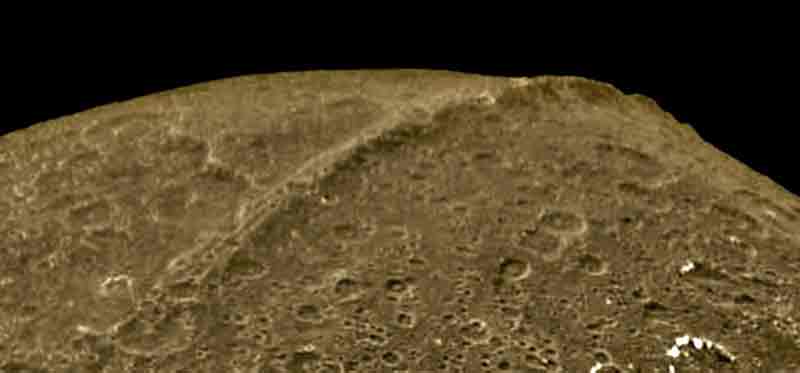
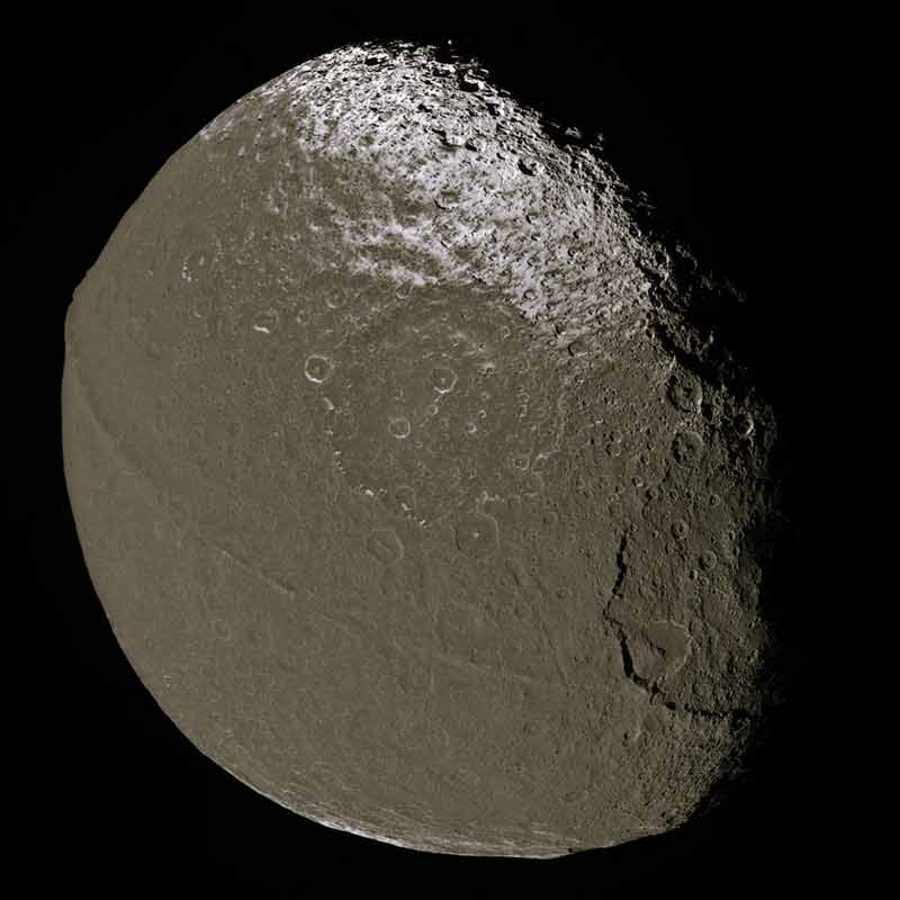
| PIA06166: Encountering Iapetus
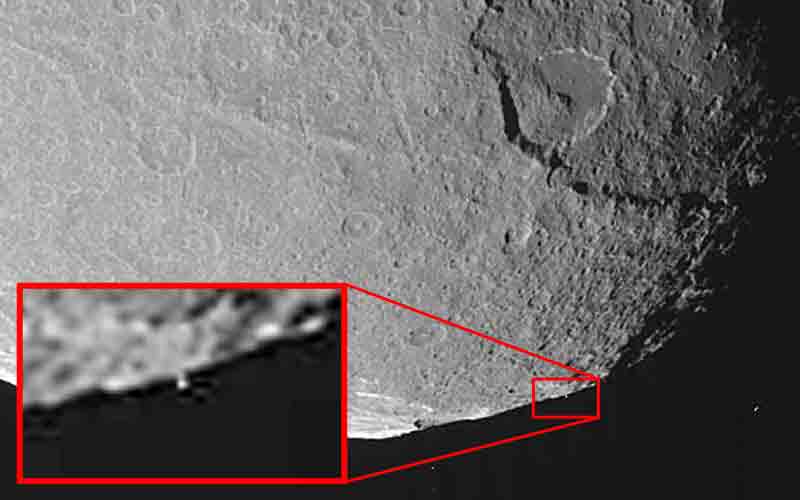
The most unique, and perhaps
most remarkable feature discovered on Iapetus in Cassini images is a topographic
ridge that coincides almost exactly with the
geographic equator. The ridge is conspicuous
in the picture as an approximately 20-kilometer wide (12 miles) band that
extends from the western (left) side of the disc almost to the day/night
boundary on the right. On the left horizon, the peak of the ridge reaches
at least 13 kilometers (8 miles) above the surrounding terrain. Along the
roughly 1,300 kilometer (800 mile) length over which it can be traced in
this picture, it remains almost exactly parallel to the equator within
a couple of degrees. The physical origin of
the ridge has yet to be explained. It is not
yet clear whether the ridge is a mountain belt that has folded upward,
or an extensional crack in the surface through which material from inside
Iapetus erupted onto the surface and accumulated locally, forming the ridge.
- NASA
PIA06166
|
|
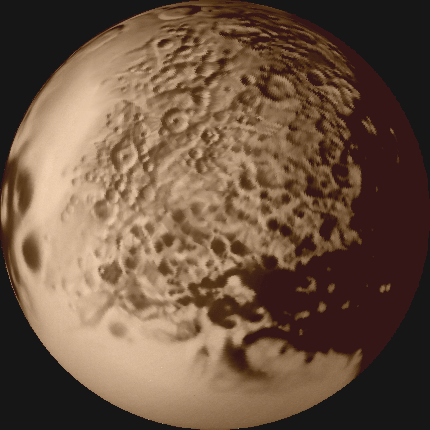
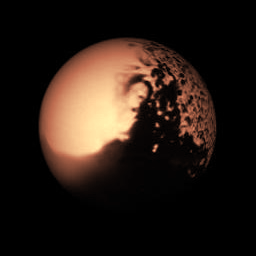
Explanation: The part that is
in direct sunlight has a shine to it as if it were metalic or covered with
ice. This is one of the strangest moons in our solar system
|
|
| February 1, 2005
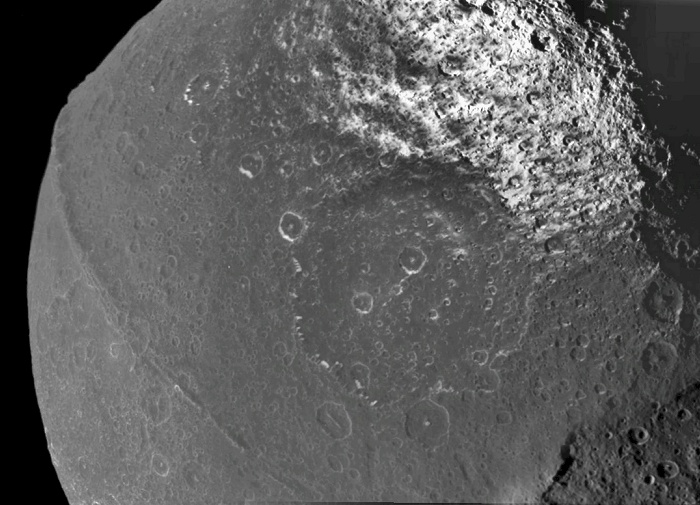
Saturn's Iapetus: Moon
with a Strange Surface
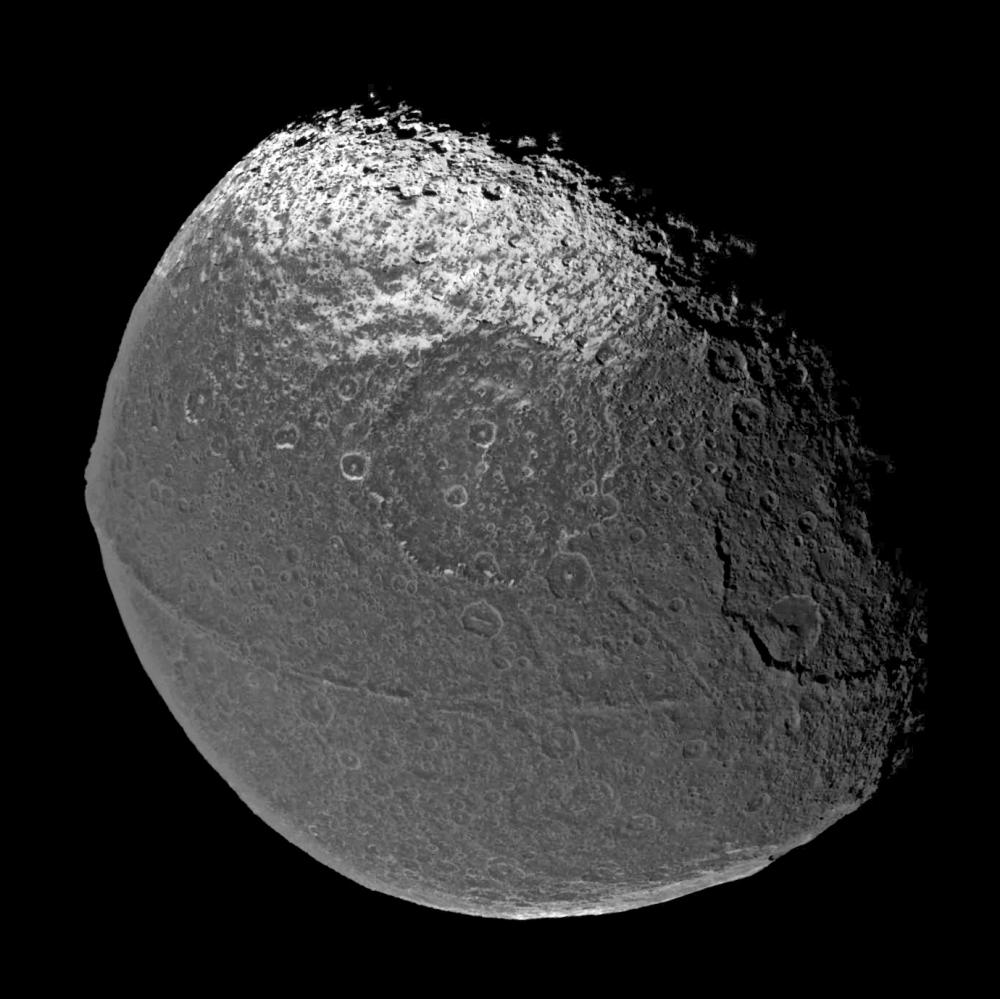
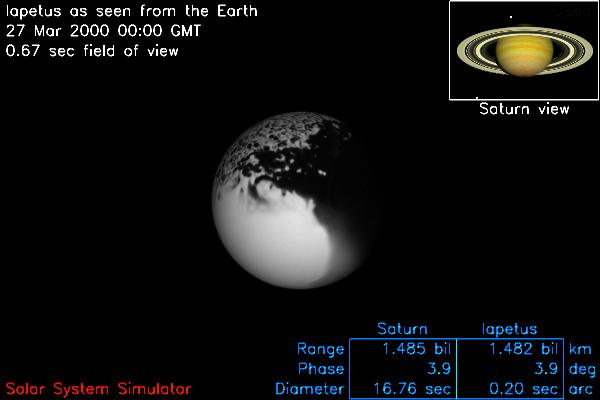
Explanation: What has happened to Saturn's moon Iapetus? A strange ridge crosses the moon near the equator, visible near the bottom of the above image, making Iapetus appear similar to the pit of a peach. Half of Iapetus is so dark that it can nearly disappear when viewed from Earth. Recent observations show that the degree of darkness of the terrain is strangely uniform, like a dark coating was somehow recently applied to an ancient and highly cratered surface. The other half of Iapetus is relatively bright but oddly covered with long and thin streaks of dark. A 400-kilometre wide impact basin is visible near the image centre, delineated by deep scarps that drop sharply to the crater floor. The above image was taken by the Saturn-orbiting Cassini spacecraft during a flyby of Iapetus at the end of last year. Authors & editors: Robert Nemiroff (MTU) & Jerry Bonnell (USRA) |
|
.
|
||||
|
..
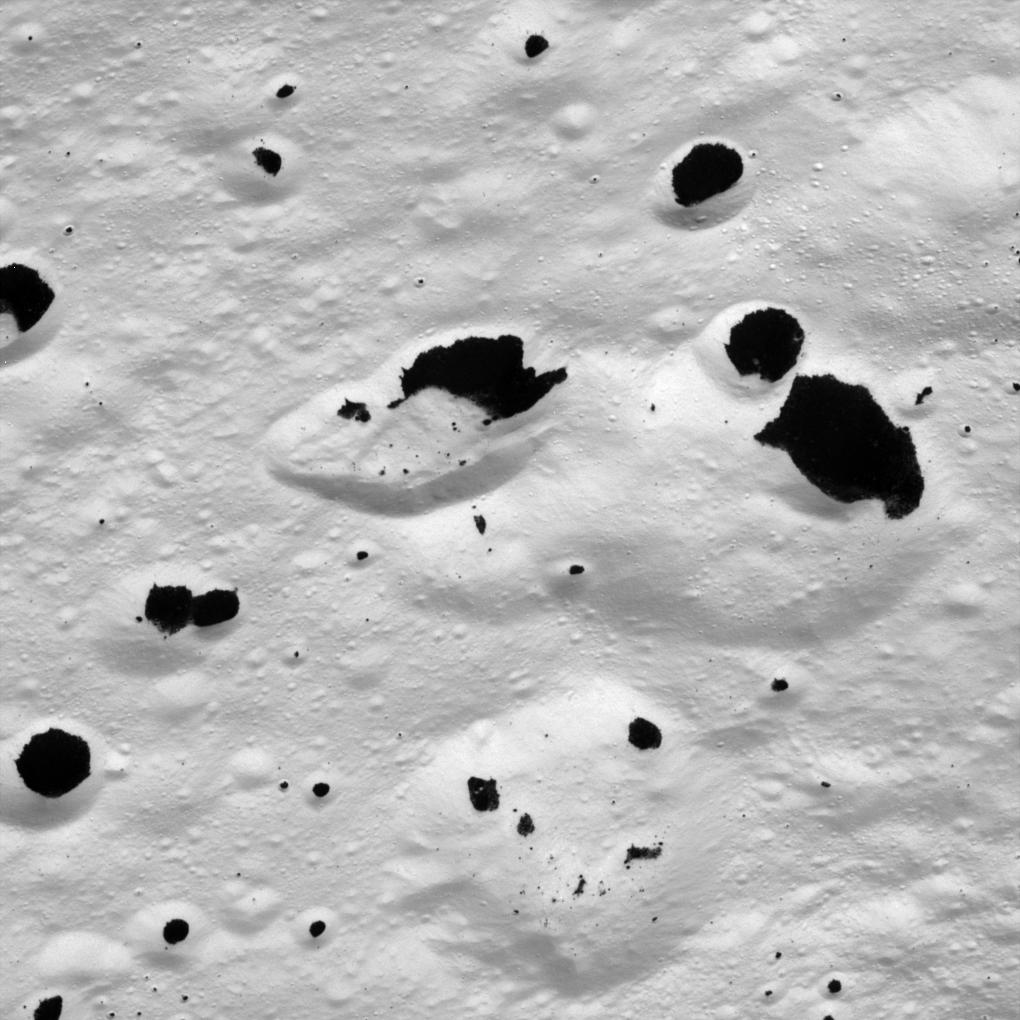
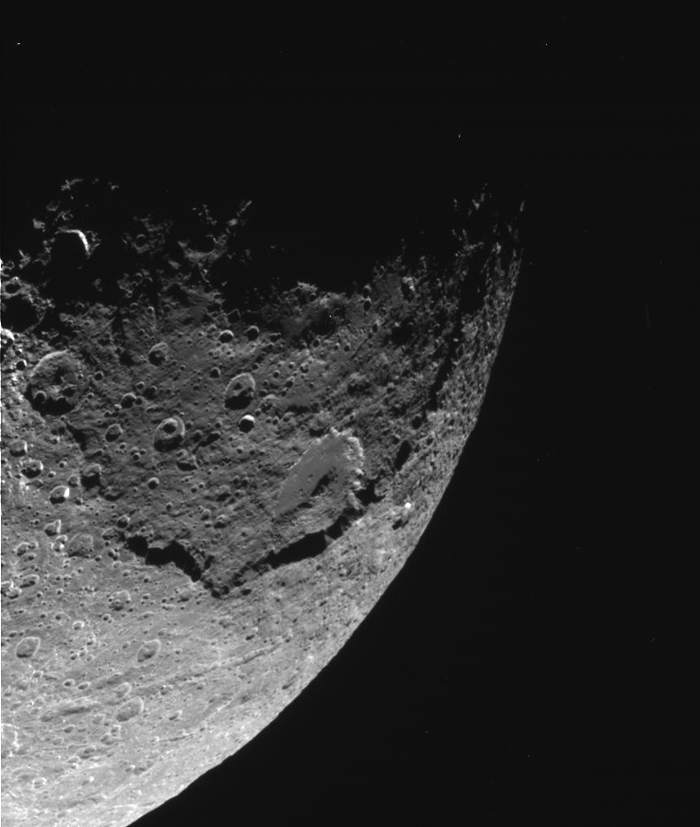
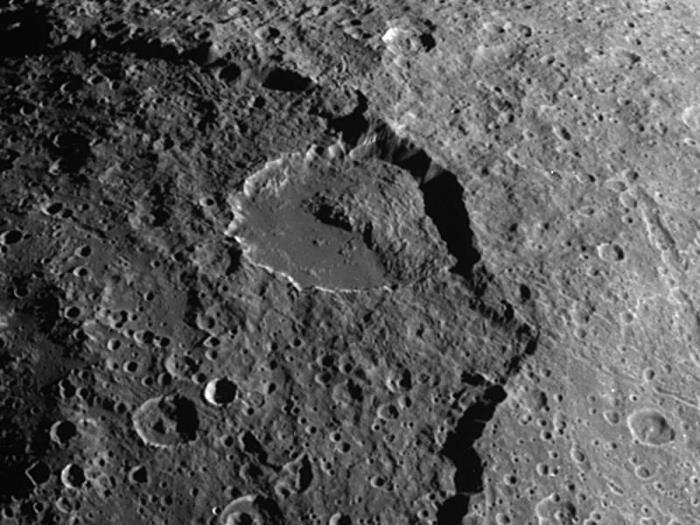
Cassini zooms in, for the first time, on the patchy, bright and dark mountains originally identified in images from the NASA Voyager spacecraft taken more than 25 years earlier. The image was acquired during Cassini's only close flyby of Iapetus, a two-toned moon of Saturn. The terrain seen here is located on the equator of Iapetus at approximately 199 degrees west longitude, in the transition region between the moon's bright and dark hemispheres. North is up. The image was taken on Sept. 10, 2007, with the Cassini spacecraft narrow-angle camera at a distance of approximately 9,240 kilometers (5,740 miles) from Iapetus. Image scale is 55 meters (180 feet) per pixel. |
||||
|
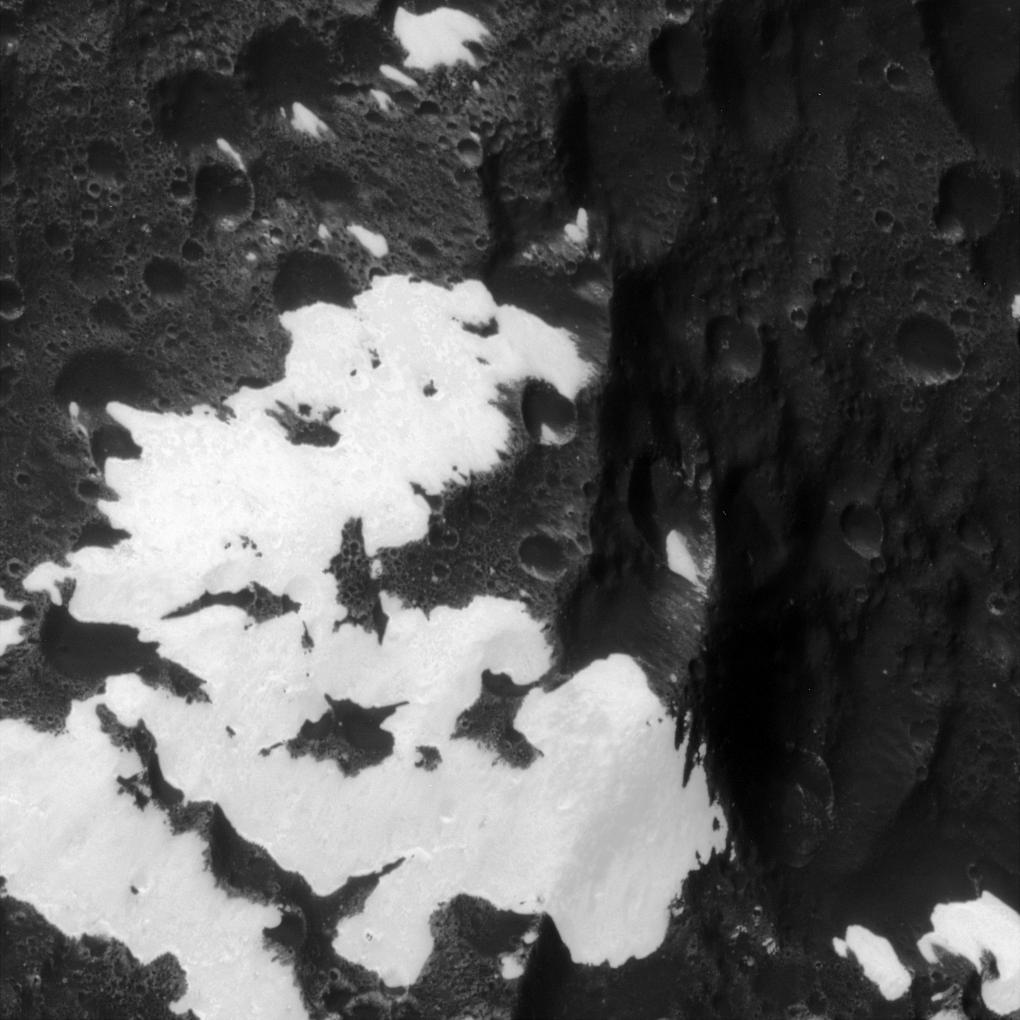
September 12, 2007 Cassini surveys a bright landscape coated by dark material on Iapetus. This image shows terrain in the transition region between the moon's dark leading hemisphere and its bright trailing hemisphere. The view was acquired during Cassini's only close flyby of the two-toned Saturn moon. The image was taken on Sept. 10, 2007, with the Cassini spacecraft narrow-angle camera at a distance of approximately 5,260 kilometers (3,270 miles) from Iapetus. Image scale is 32 meters (105 feet) per pixel. |
||||
|
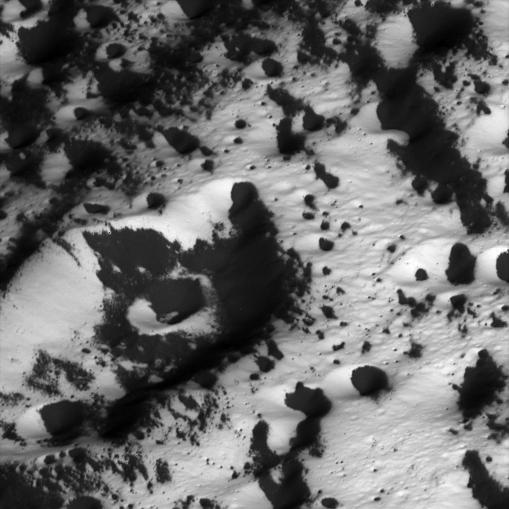
Dark material splatters the walls and floors of craters in the surreal, frozen wastelands of Iapetus. This image shows terrain in the transition region between the moon's dark leading hemisphere and its bright trailing hemisphere. The view was acquired during Cassini's only close flyby of the two-toned Saturn moon. The image was taken on Sept. 10, 2007, with the Cassini spacecraft narrow-angle camera at a distance of approximately 6,030 kilometers (3,750 miles) from Iapetus. Image scale is 36 meters (118 feet) per pixel. |
||||
|
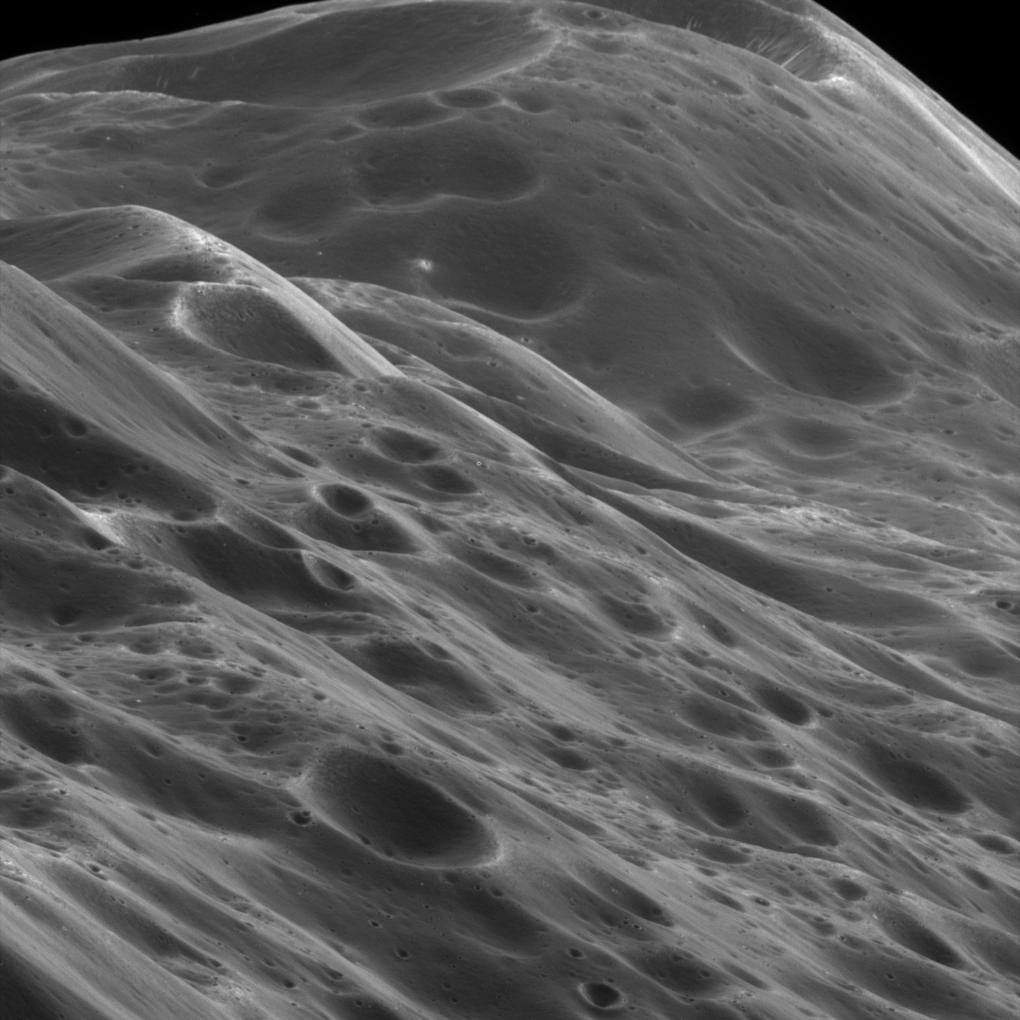
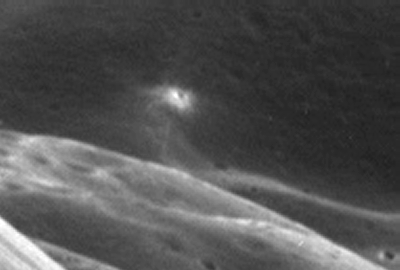
This stunning close-up view shows mountainous terrain that reaches about 10 kilometers (6 miles) high along the unique equatorial ridge of Iapetus. The view was acquired during Cassini's only close flyby of the two-toned Saturn moon. Above the middle of the image can be seen a place where an impact has exposed the bright ice beneath the dark overlying material. The image was taken on Sept. 10, 2007, with the Cassini spacecraft narrow-angle camera at a distance of approximately 3,870 kilometers (2,400 miles) from Iapetus. Image scale is 23 meters (75 feet) per pixel. ..
|
||||
|
..
|
||||
|
.
|
||||
|
.
|
||||
|
|
||||
| Copyright Notice
All clipped images and enhancements on these
pages are copyright ©2006 Land of Legends. All text related
to the clips and enhancements unless otherwise noted is are copyright ©2006
Land of Legends.
All other pictures and photos on this page, unless otherwise noted, have been gathered from pubic domain sources or are available under GNU License. Further documentation is available on our Copyright Page and our Legal Department. Article Quotes all have links to their appropriate source and are noted. All information quoted or referred to on this page is used only for non profit educational purposes. All reasonable attempts have been made that no credits are missed, but with a work of this size omissions may occur. If you see anything of yours that has not been properly credited or wish to have removed please contact the Webmaster |
Webpages © 2001-2006 Blue Knight Productions |